

Kathmandu, 19 October 2026 | Eleven Nepal | Economy & Energy
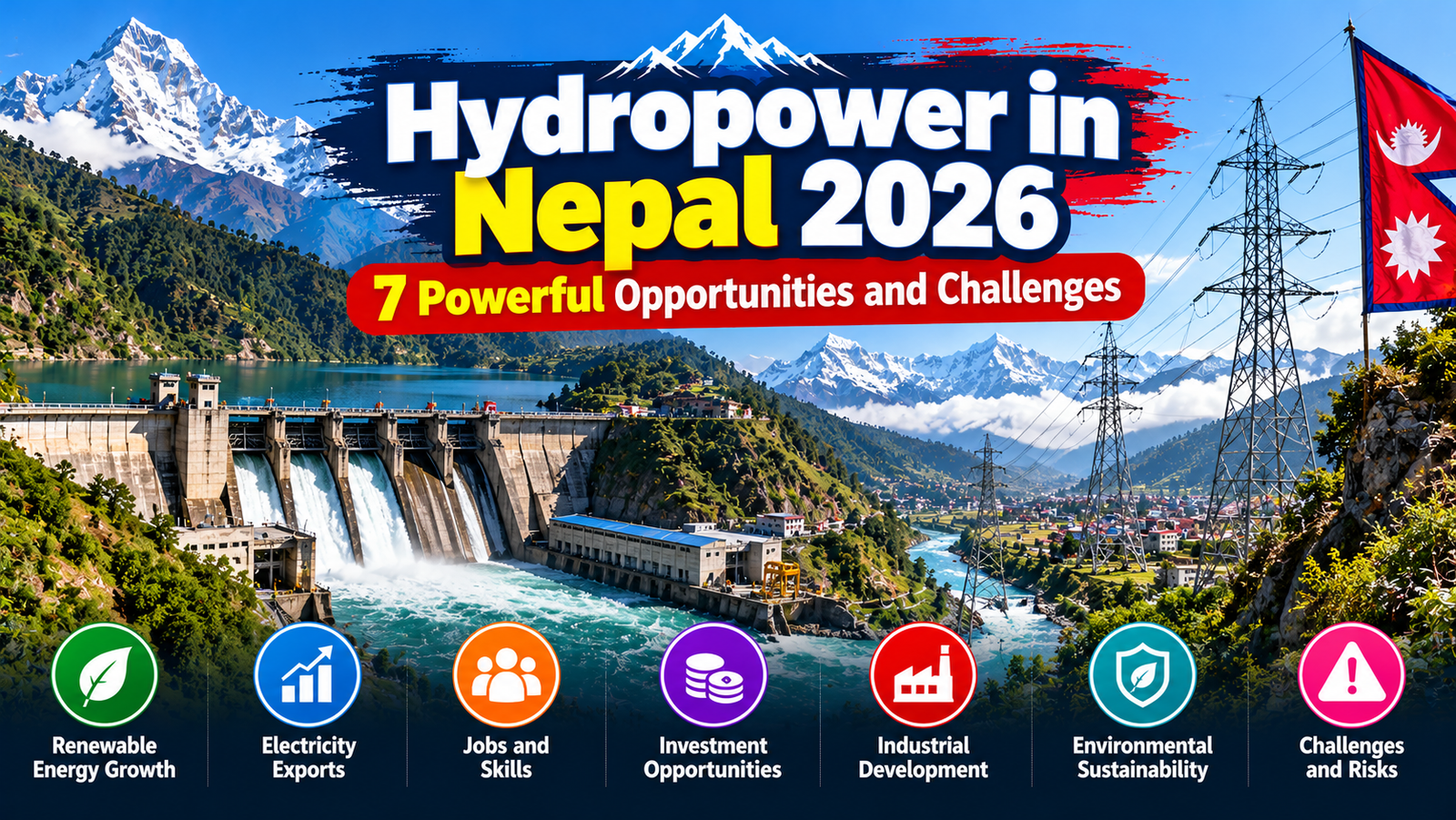
Hydropower in Nepal 2026 represents one of the country’s most important opportunities for economic development, renewable electricity generation, employment and regional energy cooperation. With powerful Himalayan rivers and significant water resources, Nepal has the potential to expand electricity production and strengthen its position in South Asia’s energy market.
Over the past decade, Nepal has made considerable progress in developing hydropower projects, expanding electricity connections and trading power with neighbouring countries.
According to the Nepal Electricity Authority (NEA), the country’s total installed electricity generation capacity reached approximately 4,120 megawatts (MW) by the end of fiscal year 2025/26. Electricity export revenue also increased, reaching approximately NPR 29.32 billion during the financial year.
However, hydropower development is not without difficulties.
The August 2026 floods caused serious damage to electricity infrastructure, highlighting the vulnerability of power plants and transmission systems in Nepal’s mountainous geography.
Other challenges include seasonal electricity shortages, expensive construction, environmental impacts, financing difficulties and the need for reliable transmission infrastructure.
Understanding these opportunities and challenges is essential because electricity development affects households, businesses, government finances and Nepal’s wider economy.
This article examines seven major opportunities associated with hydropower in Nepal, the challenges facing the industry in 2026 and the measures that could support more reliable and sustainable development.
Hydropower in Nepal 2026: Current Situation and Latest Statistics
Nepal has long been recognised for its considerable hydropower potential.
The country’s rivers originate from the Himalayas and flow through steep valleys, creating geographical conditions suitable for hydroelectric generation.
According to the United States International Trade Administration’s June 2026 country guide, Nepal has an estimated technical hydropower potential of approximately 83,000 MW, of which more than 40,000 MW is considered commercially viable under the assessment it cites.
These are estimates of potential, not existing generating capacity.
The amount that can ultimately be developed depends on economic feasibility, environmental conditions, technology, infrastructure, regulation and other factors.
Nepal’s Installed Electricity Capacity
The NEA’s annual report for fiscal year 2025/26 records total installed electricity generation capacity of approximately 4,120 MW.
This figure includes the national electricity generation portfolio, rather than hydropower alone.
Hydropower remains the dominant source of domestic electricity generation.
The country’s installed capacity has expanded through projects developed by NEA, its subsidiaries and independent power producers.
One notable development during fiscal year 2025/26 was the commencement of commercial electricity production at the 102 MW Madhya Bhotekoshi Hydropower Project.
The 40 MW Rahughat project was also reported to be undergoing testing during the period covered by the annual report.
These developments demonstrate progress in increasing electricity supply, although project commissioning schedules can change.
Electricity Exports and Revenue
NEA reported approximately NPR 29.32 billion in electricity export revenue during fiscal year 2025/26.
This represents an important source of income for Nepal’s electricity sector.
However, electricity export revenue should not be confused with net profit.
The utility also incurs costs associated with electricity purchases, transmission, infrastructure, financing and other operations.
Exchange-rate movements can also influence financial performance.
Why Nepal Still Imports Electricity
Despite growing generating capacity, Nepal continues to face seasonal imbalances.
Many hydropower projects depend on the natural flow of rivers.
Electricity production is generally stronger during periods of high river flow and weaker during dry months.
Consequently, Nepal may export surplus electricity during favourable conditions while importing electricity when domestic generation is insufficient.
This seasonal pattern is one of the central challenges facing the country’s electricity system.
1. Opportunity: Expanding Renewable Electricity Generation
One of the most significant opportunities for hydropower in Nepal 2026 is the expansion of renewable electricity production.
Hydroelectric plants convert the energy of moving or falling water into electricity.
Unlike fossil-fuel power stations, they do not need to burn coal, oil or natural gas during normal electricity generation.
This makes hydropower an important part of Nepal’s renewable energy system.
How Hydropower Works
A hydropower plant uses flowing water to rotate a turbine.
The turbine drives a generator that produces electricity.
The electricity is then transmitted through power lines to consumers.
The amount generated depends on several factors, including water flow, the available height difference and equipment efficiency.
Different hydropower technologies offer different advantages.
Run-of-River Hydropower
Many Nepalese hydropower projects operate as run-of-river facilities.
These projects use river flows with limited water storage.
They can be suitable for Nepal’s mountainous terrain and may require less extensive reservoirs than large storage projects.
However, their output changes significantly with seasonal water availability.
During the monsoon, rivers may provide enough water for substantial electricity generation.
During dry months, generation may decline.
Storage Hydropower
Storage projects use reservoirs to retain water for later electricity generation.
They can provide greater flexibility by releasing water when electricity demand is high or natural river flows are low.
However, reservoirs may require larger investments and create more complex environmental and social impacts.
The Asian Development Bank identifies storage hydropower as important for improving Nepal’s energy security and balancing seasonal electricity supply.
Why Renewable Electricity Matters
Greater access to reliable electricity can support households, schools, hospitals and businesses.
It can also help Nepal reduce dependence on imported fossil fuels when electricity replaces suitable petroleum-based energy uses.
However, hydropower is not environmentally impact-free.
Construction, river diversion and reservoir development can affect ecosystems and communities.
Renewable energy development therefore requires careful environmental planning.
2. Opportunity: Electricity Exports to India and Bangladesh
Cross-border electricity trade is another major opportunity for Nepal.
As domestic generating capacity expands, Nepal can sell surplus electricity to neighbouring markets when transmission capacity, regulatory approvals and commercial arrangements permit.
India is Nepal’s principal electricity trading partner.
Bangladesh has also become an important regional market through a cross-border arrangement involving India.
Nepal–India Electricity Trade
Nepal and India have developed electricity trading arrangements over several years.
The Dhalkebar–Muzaffarpur 400 kV transmission line is an important connection between the two countries.
Electricity exports take place through approved trading mechanisms and cross-border infrastructure.
According to NEA’s fiscal year 2024/25 annual report, Nepal exported approximately 2,380 gigawatt-hours (GWh) of electricity to India during that year.
NEA reported electricity export revenue to India of approximately NPR 17.47 billion.
The utility also imported electricity during the year.
These figures illustrate the two-way nature of Nepal’s electricity trade.
Nepal’s Electricity Exports to Bangladesh
Nepal began exporting 40 MW of electricity to Bangladesh through India on 15 June 2025 under a seasonal arrangement.
The agreement followed cooperation between Nepal, India and Bangladesh.
This development created an additional export destination for Nepalese electricity.
However, the 40 MW figure represents the agreed export capacity, not continuous year-round generation.
The arrangement is seasonal and depends on applicable agreements and operational conditions.
Why Regional Trade Matters
Electricity exports can create revenue for the power sector and support regional energy cooperation.
They may also improve the commercial viability of some generating projects.
For importing countries, electricity trade can diversify available energy sources.
However, export growth requires more than building hydropower plants.
Nepal also needs sufficient transmission capacity, reliable generation and access to approved markets.
Future Export Ambitions
Nepal and India have discussed substantial expansion of electricity trade over the coming decade.
The NEA’s 2024/25 annual report refers to an ambition to export 15,000 MW by 2035 and India’s commitment to purchase up to 10,000 MW over a ten-year period.
These are policy and development ambitions, not electricity export levels already achieved.
Their implementation depends on new projects, transmission infrastructure, financing and regulatory cooperation.
3. Opportunity: Employment and Skilled Workforce Development
Hydropower development can create employment opportunities across engineering, construction, maintenance, administration and environmental management.
The industry requires workers with different qualifications and experience levels.
Large projects may employ engineers, surveyors, technicians, electricians, construction workers, drivers, safety officers and project managers.
After construction, operational facilities continue to require maintenance and technical staff.
Construction-Stage Employment
Building a hydropower plant can involve roads, tunnels, powerhouses, transmission lines and supporting infrastructure.
These activities create demand for construction-related services.
Local businesses may also supply food, accommodation, transport and materials.
However, construction employment is often temporary.
Jobs associated with a particular project may decline when construction ends.
This distinction is important when assessing the long-term employment benefits of hydropower development.
Technical and Professional Careers
Hydropower creates opportunities for people trained in electrical, civil and mechanical engineering.
Additional roles may involve geology, hydrology, environmental science and occupational safety.
Technicians are needed to inspect and maintain turbines, generators, control systems and transmission equipment.
Digital monitoring and automation can also create demand for information technology and data-related skills.
Opportunities for Young Nepalese
Young people interested in the energy sector can explore technical education, apprenticeships and professional training.
Relevant skills may include electrical installation, mechanical maintenance, project management and environmental monitoring.
However, employment opportunities depend on actual vacancies and project requirements.
Students should research recognised qualifications and employer expectations before selecting training programmes.
Supporting Local Communities
Hydropower developers may create opportunities for local suppliers and workers.
However, these benefits are not automatically distributed equally.
Local hiring policies, training and transparent procurement can help communities participate in project-related economic activity.
The quality and duration of employment are as important as the number of jobs created.
4. Opportunity: Investment and Private-Sector Development
Hydropower is one of Nepal’s major infrastructure investment sectors.
Projects may involve public institutions, private developers, banks and international financing organisations.
The country’s large estimated hydropower potential has attracted interest from domestic and international investors.
The Role of Independent Power Producers
Independent power producers, commonly called IPPs, develop electricity generation projects outside direct NEA ownership.
Many sell electricity through power purchase agreements.
A power purchase agreement, or PPA, establishes commercial terms for the sale of electricity between a generator and a buyer.
These agreements can help developers demonstrate expected revenue when seeking project financing.
However, a signed PPA does not guarantee that a project will be completed.
Developers must still obtain financing, meet regulatory requirements and manage construction risks.
Hydropower Project Development
The NEA’s 2024/25 annual report recorded 142 IPP projects with a combined capacity of approximately 4,303 MW under construction after achieving financial closure.
It also identified additional projects at different stages of development.
These figures describe the project pipeline at that reporting date.
They should not be interpreted as capacity already generating electricity.
Opportunities for Supporting Businesses
Hydropower investment can create demand for equipment suppliers, engineering consultants, transport operators and construction contractors.
Other businesses may provide accommodation, catering, logistics and maintenance services.
This creates opportunities beyond direct electricity generation.
However, entrepreneurs need to assess procurement requirements, project schedules and payment risks.
A business should not invest heavily in equipment or facilities without understanding the likely demand.
Financial Challenges
Hydropower projects generally require substantial initial investment.
Costs may include feasibility studies, land access, construction, equipment, transmission connections, environmental safeguards and financing.
Mountainous terrain can increase engineering complexity.
Delays caused by landslides, weather or unexpected geological conditions can raise costs.
Developers also face interest-rate, currency and market risks.
Investment decisions therefore require careful technical and financial assessment.
5. Opportunity: Supporting Industry and Economic Growth
Reliable electricity is important for industrial development.
Manufacturing businesses, hotels, hospitals, digital services and other organisations depend on electricity for their operations.
Greater electricity availability can help businesses operate machinery, maintain refrigeration, use digital systems and provide services.
Electricity and Manufacturing
Factories require dependable power for production equipment.
Unexpected interruptions can reduce productivity and increase operating costs.
Reliable electricity may therefore support industrial investment.
However, electricity availability alone does not guarantee manufacturing growth.
Businesses also need transport infrastructure, skilled workers, finance and access to markets.
Hydropower and Tourism
Tourism businesses depend on electricity for lighting, food storage, communications and hospitality services.
Reliable supply can improve operations in hotels, restaurants and other facilities.
Hydropower development may also improve local roads or other infrastructure.
However, tourism benefits must be weighed against potential environmental impacts.
Poorly planned infrastructure can damage landscapes and affect destinations that depend on natural beauty.
Electricity and Digital Businesses
Digital businesses require reliable power for computers, communications and supporting equipment.
Electricity is also important for telecommunications networks and data infrastructure.
Expanding reliable electricity access can therefore support Nepal’s broader digital economy.
Economic Growth in 2026
The World Bank’s October 2026 Nepal Development Update reports that Nepal’s industrial sector grew by approximately 5.7% during fiscal year 2025/26.
It identifies a 21% expansion in electricity generation and increased hydropower capacity as important contributors to industrial growth.
This illustrates the sector’s significance within Nepal’s economy.
However, growth in electricity generation does not automatically translate into equal improvements across every industry or household.
The wider benefits depend on infrastructure, affordability and economic conditions.
6. Opportunity: Improving Domestic Energy Security
Energy security means having reliable access to sufficient energy at an affordable cost.
For Nepal, hydropower development offers opportunities to strengthen domestic electricity supply.
However, relying heavily on river-based electricity also creates vulnerabilities.
The Problem of Seasonal Generation
Many Nepalese hydropower plants generate more electricity during the wet season.
During dry months, river flows decline.
This can reduce domestic generation even when installed capacity remains unchanged.
Nepal may therefore need electricity imports to meet demand.
The Asian Development Bank highlights this seasonal imbalance as a major reason to develop storage hydropower and improve power-system flexibility.
Why Storage Projects Matter
Storage hydropower can help manage electricity supply across different periods.
Water can be retained and released when needed, subject to reservoir operating conditions.
This can support electricity availability during periods of lower river flow.
However, storage projects are technically complex and expensive.
They also require detailed assessments of environmental and social impacts.
Combining Different Energy Sources
Hydropower can operate alongside other renewable technologies.
Solar electricity, for example, may complement hydropower under certain conditions.
Energy diversification can reduce dependence on one source of generation.
However, integrating different technologies requires appropriate grid infrastructure and system planning.
Electricity Transmission and Distribution
Generating electricity is only one part of energy security.
Power must also reach households and businesses through reliable transmission and distribution networks.
NEA’s 2025/26 annual review reported progress on several major transmission lines, including the Khimti–Barhabise 400 kV and Marsyangdi–Bharatpur 220 kV connections.
These investments can strengthen the electricity network.
However, maintaining and expanding transmission infrastructure remains an ongoing challenge.
7. Opportunity: Sustainable Development and Regional Cooperation
Hydropower development can contribute to broader sustainability goals when projects are carefully planned and managed.
Renewable electricity can support the transition away from fossil-fuel-based energy uses.
Regional electricity cooperation may also help neighbouring countries share energy resources.
However, sustainable development requires attention to environmental protection, community rights and climate resilience.
Environmental Planning
Hydropower projects can alter river flows and affect aquatic ecosystems.
Construction may disturb forests, agricultural land and wildlife habitats.
Large reservoirs can also change land use and affect settlements.
Environmental impact assessments are therefore essential.
Developers need to identify potential effects and implement appropriate mitigation measures.
Community Participation
Communities living near hydropower projects may experience both benefits and disruptions.
Potential benefits include employment, infrastructure improvements and business opportunities.
Potential costs may include changes in land access, environmental conditions and local livelihoods.
Meaningful consultation helps identify concerns before construction begins.
Compensation and benefit-sharing arrangements should be transparent and consistent with applicable law.
Regional Electricity Cooperation
Nepal’s electricity relationships with India and Bangladesh demonstrate opportunities for regional cooperation.
Cross-border electricity trade requires coordination on infrastructure, regulation and commercial arrangements.
Successful cooperation can improve market access and support regional energy planning.
However, Nepal must also consider domestic electricity needs and the financial sustainability of its projects.
Climate-Resilient Development
Climate resilience is increasingly important for hydropower infrastructure.
Projects must be designed with consideration for floods, landslides, sediment and changing river conditions.
Historical weather records alone may not fully capture future risks.
Long-term planning therefore requires updated hazard assessments and monitoring.
Major Challenges Facing Hydropower in Nepal 2026
Despite the opportunities, several challenges remain.
1. Floods, Landslides and Extreme Weather
Nepal’s mountainous geography creates substantial natural hazards.
Hydropower plants, roads and transmission lines can be exposed to floods, landslides and debris flows.
The August 2026 floods demonstrated the seriousness of these risks.
The World Bank’s October 2026 Nepal Development Update reports that the disaster affected 12 hydropower projects.
These included seven operational projects with a combined capacity of 256.1 MW and five projects under construction with a combined capacity of 395.02 MW.
The flood also affected a 25 MW solar facility.
Damage to transmission infrastructure disrupted an additional 149.6 MW.
The World Bank calculated approximately 430.7 MW of affected generation and transmission capacity, equivalent to around 10.6% of Nepal’s fiscal year 2025/26 installed hydropower and solar capacity.
These figures describe affected capacity, not a permanent loss of all those generating assets.
The impact depends on the extent of damage and the time required for repairs.
2. Seasonal Electricity Shortages
Run-of-river projects depend heavily on seasonal water availability.
This creates differences between wet-season and dry-season electricity generation.
Without sufficient storage and complementary energy sources, Nepal may continue importing electricity during periods of low river flow.
3. High Construction Costs
Hydropower plants require significant investment before electricity generation begins.
Remote locations, difficult terrain and complex engineering can increase costs.
Unexpected geological conditions may also delay projects.
These risks can affect both public and private developers.
4. Environmental and Social Impacts
Hydropower development may affect rivers, forests, agricultural land and local communities.
Large projects can create disputes over land acquisition, compensation and environmental management.
Effective consultation and monitoring are necessary throughout project development.
5. Transmission Infrastructure Constraints
New generating capacity is useful only when electricity can reach consumers or export markets.
Transmission lines require investment, land access and regulatory approvals.
Delays in transmission construction can reduce the commercial value of completed generating projects.
6. Financing and Investment Risks
Hydropower projects often depend on long-term financing.
Developers may face interest-rate changes, cost overruns and delays in expected revenue.
International projects can also involve currency and political risks.
Strong project preparation and transparent contractual arrangements are important.
7. Dependence on External Electricity Markets
Electricity exports offer revenue opportunities, but market access depends on international agreements and regulatory conditions.
Changes in demand, prices or trading rules may affect export earnings.
Nepal therefore needs to balance export ambitions with domestic demand and system reliability.
How the August 2026 Floods Changed Nepal’s Hydropower Outlook
The August 2026 disaster represents a major recent test of Nepal’s electricity infrastructure.
According to the World Bank, an extreme flash flood and debris flow began in the Rasuwagadhi border region on 26 August 2026.
The event affected the Bhote Koshi and Trishuli river systems, causing destruction across parts of Rasuwa, Nuwakot and Dhading.
Hydropower infrastructure was among the most seriously affected sectors.
Damage to Electricity Generation
Floodwaters, debris and sediment damaged power infrastructure.
Some facilities experienced direct physical damage, while others were affected by disruptions to transmission connections.
The World Bank identified energy as the most important channel through which the disaster could affect Nepal’s economy.
Impact on Electricity Exports
Damage to generating facilities and transmission infrastructure reduced the availability of electricity for domestic use and export.
The World Bank estimated that approximately 60 MW of export-oriented hydropower capacity was affected.
This could weigh on electricity export earnings during fiscal year 2026/27.
However, the eventual financial impact depends on repairs, restoration schedules and market conditions.
Lessons for Future Projects
The floods demonstrate the importance of considering extreme weather and geological hazards during project planning.
Future development may require improved site selection, stronger engineering standards and more comprehensive emergency procedures.
Early-warning systems and regular monitoring can also support risk management.
Projects already operating may need updated assessments of their exposure to changing environmental conditions.
Rebuilding With Resilience
Restoring damaged infrastructure is important, but rebuilding also presents an opportunity to improve resilience.
Where technically and financially feasible, repairs can incorporate lessons from the disaster.
The priority should be reliable electricity supply, worker safety and long-term infrastructure protection.
Important Hydropower Projects and Infrastructure in Nepal
Nepal’s electricity sector includes a combination of operating projects, facilities under construction and proposed developments.
Their status should be assessed using official project updates.
Upper Tamakoshi Hydropower Project
Upper Tamakoshi is one of Nepal’s major hydropower facilities.
Its installed capacity is 456 MW.
The project illustrates the scale of hydropower development achieved within Nepal.
However, installed capacity does not mean the plant generates 456 MW continuously throughout the year.
Output depends on water availability and operational conditions.
Madhya Bhotekoshi Hydropower Project
The 102 MW Madhya Bhotekoshi project commenced commercial electricity production during fiscal year 2025/26, according to NEA’s annual review.
It represents an addition to Nepal’s electricity generation portfolio.
Rahughat Hydropower Project
The 40 MW Rahughat project was reported to be in testing during the period covered by NEA’s fiscal year 2025/26 annual report.
Testing should not be described as full commercial operation without a subsequent verified announcement.
Dudh Koshi Hydropower Development
The Asian Development Bank identifies the Dudh Koshi project as an important proposed storage hydropower investment.
Storage development could help address Nepal’s seasonal electricity imbalance.
However, project financing, construction and environmental safeguards remain important considerations.
Cross-Border Transmission Lines
Cross-border transmission infrastructure is essential for electricity trade.
The Dhalkebar–Muzaffarpur line is an established connection.
Additional proposed connections could expand future trading capacity, subject to completion and operational approvals.
Hydropower in Nepal 2026 and the Role of Government
Government institutions play an important role in planning, regulating and overseeing electricity development.
The Ministry of Energy, Water Resources and Irrigation is responsible for major energy policy functions.
The Nepal Electricity Authority operates important parts of the electricity system.
Other regulatory and technical institutions are involved in licensing, electricity regulation and project development.
Improving Project Approval
Hydropower developers must comply with applicable licensing and environmental requirements.
Efficient administration can help reduce unnecessary delays.
However, faster approvals should not come at the expense of environmental assessment or community consultation.
Strengthening Regulation
Electricity regulation affects tariffs, investment and the operation of power markets.
Clear and predictable rules can support investor confidence.
Regulation must also protect consumers and maintain the reliability of the electricity system.
Improving Transparency
Public access to reliable project information can help citizens understand costs, progress and expected benefits.
Transparent reporting is particularly important for large infrastructure projects involving public funds or public guarantees.
Can Hydropower Make Nepal Economically Stronger?
Hydropower has the potential to contribute to Nepal’s economy through electricity supply, exports, investment and employment.
However, the economic outcome depends on how projects are financed, built and operated.
Electricity export revenue is not equivalent to national profit.
Likewise, a large installed capacity does not automatically guarantee uninterrupted domestic electricity supply.
To generate broader economic benefits, Nepal needs reliable infrastructure, competitive industries and responsible financial management.
Supporting Domestic Businesses
Affordable and reliable electricity can improve conditions for manufacturing, hospitality and other industries.
However, businesses also need transport, finance, skilled workers and market access.
Hydropower development should therefore be connected to broader economic planning.
Supporting Public Finances
Electricity sector revenue may support investment and public institutions.
However, large infrastructure projects can also create financial obligations.
Debt servicing, maintenance and operational costs must be considered.
Supporting Regional Development
Projects can create local economic activity, but benefits depend on employment arrangements, procurement and community participation.
Infrastructure improvements should be designed to support residents as well as project operations.
What Should Nepal Prioritise for Sustainable Hydropower Development?
Several priorities emerge from the evidence available in 2026.
Improve Disaster Risk Assessment
Project planning should use updated information about floods, landslides and changing river conditions.
Expand Reliable Transmission Networks
Electricity generation must be matched with sufficient transmission and distribution capacity.
Develop a Balanced Electricity Mix
Storage hydropower and complementary renewable technologies can help manage seasonal supply risks.
Strengthen Environmental Protection
Projects should minimise avoidable damage and comply with environmental safeguards.
Support Local Employment
Training and fair recruitment can help Nepalese workers benefit from infrastructure investment.
Improve Financial Planning
Project developers should use realistic construction schedules and account for financing and operational risks.
Maintain Regional Cooperation
Electricity trade agreements can support market access, but domestic energy security must remain a priority.
Hydropower development is closely connected to Nepal’s economy, employment opportunities and infrastructure.
Reliable electricity can support Nepal’s tourism industry by helping hotels, restaurants and other hospitality businesses operate more efficiently.
Hydropower investment may also create skilled employment opportunities and help address some of the employment challenges facing young Nepalese.
Entrepreneurs interested in supplying services to energy projects can explore our guide to starting a business in Nepal.
The expansion of reliable electricity can also support the growth of digital payments in Nepal and other technology-based services.
Frequently Asked Questions About Hydropower in Nepal 2026
1. What is the current hydropower capacity of Nepal in 2026?
NEA’s fiscal year 2025/26 annual report records approximately 4,120 MW of total installed national electricity generation capacity. This includes the broader electricity portfolio and should not be described as hydropower capacity alone.
2. How much hydropower potential does Nepal have?
A June 2026 United States International Trade Administration guide cites approximately 83,000 MW of technical potential and more than 40,000 MW considered commercially viable. These are estimates, not operating capacity.
3. Does Nepal export electricity to India?
Yes. Nepal exports electricity to India through approved cross-border trading arrangements and transmission infrastructure.
4. Does Nepal export electricity to Bangladesh?
Yes. A seasonal arrangement for exporting 40 MW of electricity to Bangladesh through India began in June 2025.
5. Why does Nepal import electricity despite having hydropower?
Many plants depend on seasonal river flows. Generation can decline during dry months, requiring electricity imports when domestic production is insufficient.
6. What are the main benefits of hydropower in Nepal?
Potential benefits include renewable electricity, export revenue, employment, investment, improved energy security and support for domestic industries.
7. What are the main challenges facing Nepal’s hydropower industry?
Challenges include natural disasters, seasonal generation, high construction costs, financing, environmental impacts and transmission constraints.
8. How did the August 2026 floods affect hydropower?
The World Bank reports that the disaster affected multiple hydropower projects and transmission infrastructure, with approximately 430.7 MW of generation and transmission capacity affected.
9. Is hydropower environmentally friendly?
Hydropower generates renewable electricity without burning fossil fuels during normal operation. However, projects can affect rivers, ecosystems, land use and communities.
10. What is the difference between run-of-river and storage hydropower?
Run-of-river projects depend mainly on natural river flow. Storage projects retain water in reservoirs and can provide greater flexibility in electricity generation.
11. Can young Nepalese find jobs in hydropower?
The sector requires engineers, technicians, construction workers, environmental specialists and other professionals. Employment depends on qualifications, experience and available vacancies.
12. Can hydropower reduce Nepal’s dependence on imported fuel?
Greater electricity availability can support the use of electric technologies in suitable sectors. However, the extent of fuel substitution depends on infrastructure, costs and adoption.
13. What is Nepal’s electricity export target?
NEA’s 2024/25 annual report refers to an ambition of exporting 15,000 MW by 2035. This is a target, not an achieved level of exports.
14. Why are transmission lines important?
Transmission lines transport electricity from generating stations to consumers and export connections. Without adequate transmission infrastructure, available electricity may not reach the intended market.
15. What is the future of hydropower in Nepal?
Nepal has substantial development opportunities, but outcomes depend on project financing, environmental safeguards, transmission infrastructure, regional trade and disaster resilience.
Conclusion: Hydropower’s Opportunities and Challenges in 2026
Hydropower in Nepal 2026 is an important part of the country’s economic and energy development.
Nepal has expanded electricity generation capacity, increased electricity exports and strengthened regional energy cooperation.
The NEA’s reported 4,120 MW of installed national electricity capacity and NPR 29.32 billion in export revenue during fiscal year 2025/26 demonstrate the scale of the sector’s recent development.
However, these achievements must be considered alongside the industry’s vulnerabilities.
The August 2026 floods damaged hydropower and transmission infrastructure, disrupted electricity supply and highlighted the risks of developing energy projects in environmentally sensitive mountain regions.
Seasonal water availability, financing difficulties and transmission constraints also remain significant challenges.
Nepal’s long-term opportunity is not simply to construct more power plants.
It is to develop an electricity system that is reliable, financially sustainable, environmentally responsible and resilient to natural disasters.
Hydropower can support employment, industrial development and regional electricity trade.
Whether those benefits are fully realised will depend on careful planning, transparent institutions, responsible investment and the protection of affected communities.
For Nepal, the future of hydropower should be measured not only in megawatts, but also in the reliability of electricity supply and the benefits delivered to people across the country.
References and Credible Sources
1. Nepal Electricity Authority (2026). Annual Report 2025/2026. Published August 2026.
https://www.nea.org.np/en/detail/annual-report-20252026
2. Nepal Electricity Authority (2025). Annual Report 2024/2025.
https://pmitd.nea.org.np/uploads/shares/annual_report/89899842.pdf
3. World Bank (October 2026). Nepal Development Update. Includes analysis of the August 2026 floods and electricity-sector impacts.
https://www.worldbank.org/en/country/nepal/publication/nepaldevelopmentupdate
4. United States International Trade Administration (15 June 2026). Nepal – Hydropower, Water Resources, and Renewable Energy.
https://www.trade.gov/country-commercial-guides/nepal-hydropower-water-resources-and-renewable-energy
5. Asian Development Bank. Dudh Koshi Hydropower Project. Project information and analysis of Nepal’s storage hydropower needs.
https://www.adb.org/projects/50049-002/main
6. Nepal Electricity Authority. Annual Reports and Official Publications.
https://nea.org.np/en/category/annual-reports
7. Ministry of Energy, Water Resources and Irrigation, Government of Nepal. Official Energy Policy and Sector Information.
https://moewri.gov.np/
8. Department of Electricity Development, Government of Nepal. Hydropower Licensing and Project Information.
https://www.doed.gov.np/
9. Electricity Regulatory Commission, Nepal. Regulatory Information and Directives.
https://erc.gov.np/
10. Reuters (1 September 2026). Deadly Floods Test Nepal’s Hydropower Ambitions.
https://www.reuters.com/business/energy/deadly-floods-test-nepals-hydropower-ambitions-2026-09-01/
Editorial note: This article uses information available through 19 October 2026. Installed capacity, generation, electricity exports, revenue and proposed project capacity are different measurements. Flood damage assessments and project statuses may change as repairs and official reporting continue.

