


Introduction:
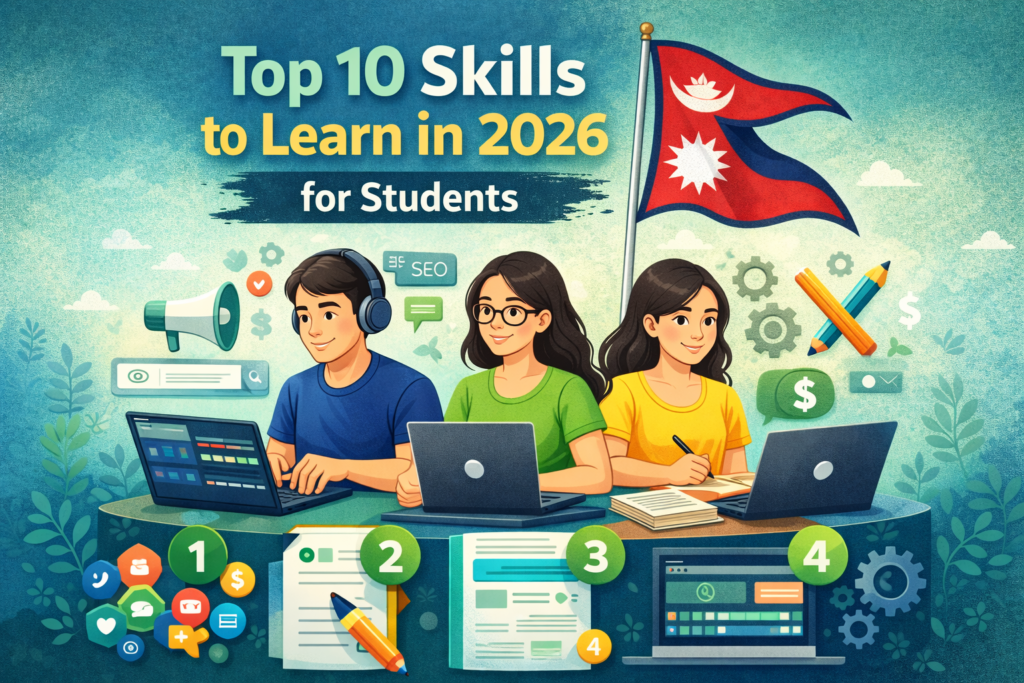
Choosing the right skills to learn in 2026 can help students prepare for changing career opportunities and develop practical experience.
Learning the right skills can help students prepare for employment, explore freelancing, and become more confident in a changing job market. Whether you are studying in Nepal or elsewhere, developing practical skills alongside your education can create opportunities for personal and professional growth.
Technology, artificial intelligence, and digital platforms are changing how people study and work. However, technical knowledge alone is not enough. Communication, critical thinking, financial awareness, and problem-solving are equally important.Students interested in building a digital career can also explore our Technology articles for more information about emerging technologies and online opportunities.
In this guide, Eleven Nepal explores 10 valuable skills to learn in 2026 for students, including what each skill involves, how to start learning, and where it might lead.
Why Should Students Learn New Skills in 2026?
Understanding which skills to learn in 2026 is especially important for students who want to combine academic knowledge with practical abilities.Academic qualifications remain important, but employers also look for candidates who can apply their knowledge in real situations.
Developing practical skills can help students:
- Improve their confidence and employability.
- Explore internships, part-time work, and freelance opportunities.
- Build a portfolio that demonstrates their abilities.
- Adapt to technological and workplace changes.
- Develop independence and stronger decision-making abilities.
For Nepali students, digital skills can also make it easier to explore opportunities beyond their immediate location. However, online work requires preparation, reliable internet access, and an understanding of payment and platform requirements.The following skills to learn in 2026 cover digital technology, creativity, communication, and essential professional abilities.
1. Digital Marketing
Digital marketing involves promoting products, services, and organisations through online channels.
Businesses use websites, search engines, social media, and email to communicate with customers. Students who understand these channels can contribute to marketing projects or develop their own online initiatives.
What to learn:
- Search engine optimisation (SEO).
- Social media marketing.
- Content strategy and planning.
- Email marketing.
- Website analytics.
How to start: Create a practice social media campaign for a small business or personal project. Learn how to define an audience, plan posts, and evaluate engagement.
Free learning resource: Google Skillshop.
Possible opportunities: Marketing assistant, social media coordinator, content creator, or freelance marketing support.
2. Content Writing and Research
Content writing involves producing clear, informative, and engaging material for websites, blogs, newsletters, and other digital platforms.
Good writing requires more than correct grammar. Writers need to understand their audience, research information, organise ideas, and verify facts.
What to learn:
- Article and blog writing.
- Research and fact-checking.
- SEO fundamentals.
- Editing and proofreading.
- Responsible use of AI writing tools.
How to start: Choose a topic you understand, research it using credible sources, and publish a useful article. Build a portfolio containing several examples of your work.
Possible opportunities: Blog writer, content assistant, copywriter, or editorial freelancer.
AI tools can help with outlining and editing, but students should check facts and contribute their own understanding rather than publishing unverified generated content.
3. Graphic Design
Graphic design combines creativity and visual communication. It is useful for businesses, educational projects, events, and social media.
Beginners can start with accessible design tools before progressing to more advanced software.
What to learn:
- Typography and colour combinations.
- Layout and visual hierarchy.
- Social media graphics.
- Presentation design.
- Basic branding.
How to start: Use Canva to create five sample designs, such as a poster, a YouTube thumbnail, and an event announcement.
Possible opportunities: Junior designer, social media designer, or freelance creative assistant.
A strong portfolio and understanding of design principles matter more than simply knowing how to operate software.
4. Video Editing
Video editing helps turn recorded footage into clear and engaging content.
Students can use this skill for educational videos, promotional material, interviews, and social media projects.
What to learn:
- Cutting and arranging footage.
- Audio editing.
- Captions and subtitles.
- Colour correction.
- Storytelling and pacing.
How to start: Record a short educational video on your phone and edit it into a one-minute presentation.
Tools such as CapCut and DaVinci Resolve offer ways to practise, although features and device requirements vary.
Possible opportunities: Video editing assistant, content production assistant, or freelance editor.
5. Web Development and Website Management
Web development involves creating and maintaining websites. It combines technical knowledge, design, and problem-solving.
Students can begin with basic website-building tools before learning programming languages.
What to learn:
- HTML and CSS.
- Basic JavaScript.
- WordPress website management.
- Responsive design.
- Website accessibility and performance.
How to start: Build a simple personal portfolio website containing an introduction, your projects, and contact information.
Free learning resource: freeCodeCamp.
Possible opportunities: Website assistant, junior web developer, WordPress support, or freelance website maintenance.
6. Freelancing and Client Management
Freelancing means providing services independently to clients rather than working exclusively as a traditional employee.
It is important to understand that freelancing is a way of working, not a guaranteed source of income. Students generally need a marketable skill before they can offer a service.
What to learn:
- Communicating with clients.
- Preparing proposals and quotations.
- Managing deadlines.
- Defining project requirements.
- Handling feedback and revisions.
How to start: Choose a service you can provide competently, create two or three portfolio samples, and practise writing a professional proposal.
Students interested in online platforms should check age requirements, identity verification rules, fees, and payment availability in their country before registering.
Possible opportunities: Independent work in writing, design, development, editing, or marketing.
7. Artificial Intelligence and Digital Literacy
Artificial intelligence is becoming part of everyday study and professional workflows. Students can benefit from understanding what AI tools can do and where their limitations lie.
Learning to use AI responsibly is more valuable than simply copying generated answers.
What to learn:
- AI fundamentals.
- Writing effective prompts.
- Checking AI-generated information.
- Spreadsheet and data skills.
- Basic automation.
- Data privacy and digital security.
How to start: Use an AI tool to organise a study plan or explain a difficult concept. Then verify the output using textbooks, official resources, or other reliable references.
Free learning resource: Elements of AI.
Possible opportunities: AI-assisted administrative work, digital operations, research support, and other roles where AI literacy is useful.
AI knowledge may improve adaptability, but no single skill can guarantee future employment.
8. Communication Skills
Communication is essential in almost every career. Students need to explain ideas, listen carefully, work in teams, and express themselves professionally.
What to learn:
- Public speaking.
- Professional email writing.
- Active listening.
- Presentation skills.
- Teamwork and constructive feedback.
How to start: Practise delivering a three-minute presentation about a topic you know. Record yourself and identify areas for improvement.
For Nepali students, developing confidence in both Nepali and English communication may be useful depending on their career goals.
Possible opportunities: Communication skills support careers in business, hospitality, education, customer service, management, and many other fields.
9. Financial Literacy
Financial literacy helps students understand how to manage money and make informed financial decisions.
It is useful whether someone receives a monthly allowance, earns from part-time employment, or plans to start a business.
What to learn:
- Creating a monthly budget.
- Tracking income and expenses.
- Building savings habits.
- Understanding borrowing costs.
- Recognising scams and financial risks.
- Basic concepts of investing.
How to start: Track your spending for 30 days and divide expenses into essential and non-essential categories. Set a realistic savings target.
Students should understand that investing involves risk and should avoid promises of quick or guaranteed profits.
10. Critical Thinking and Problem-Solving
Critical thinking involves evaluating information carefully before making decisions. Problem-solving means identifying challenges and developing practical solutions.
These skills are useful in education, employment, entrepreneurship, and everyday life.
What to learn:
- Identifying the causes of a problem.
- Comparing possible solutions.
- Evaluating evidence.
- Making informed decisions.
- Learning from mistakes.
How to start: Identify a small problem at your college or in your community. Research its causes, suggest possible solutions, and explain which option appears most practical.
Possible opportunities: These abilities support work across technology, business, healthcare, hospitality, education, and other industries.
Which Skill Should Students Learn First?
The best starting point depends on your interests, available resources, and long-term goals.
| Your interest | Skill to consider |
|---|---|
| Writing and researching | Content writing |
| Art and creativity | Graphic design |
| Social media and business | Digital marketing |
| Computers and coding | Web development |
| Videos and storytelling | Video editing |
| Technology and productivity | AI and digital literacy |
| Leadership and teamwork | Communication |
| Managing personal money | Financial literacy |
You do not need to master all ten skills. Starting with one practical skill and developing it consistently is often more manageable.
How to Start Learning Skills for Free
Students can begin learning without immediately paying for expensive courses.
Step 1: Choose one skill. Select something that interests you and fits your career goals.
Step 2: Find reliable learning materials. Explore free courses, official documentation, educational videos, and reputable learning platforms.
Step 3: Create a learning schedule. Even 30–45 minutes of focused practice on most days can help build consistency.
Step 4: Complete a practical project. Apply your knowledge by creating something you can demonstrate to others.
Step 5: Build a portfolio. Collect your strongest projects and explain what you learned.
Step 6: Request feedback. Ask teachers, experienced professionals, or peers to review your work.
Step 7: Keep improving. Update your skills as tools, technologies, and professional requirements change.
Common Mistakes Students Should Avoid
Students sometimes spend too much time collecting course certificates without practising what they have learned.
Other common mistakes include:
- Trying to learn several complex skills simultaneously.
- Expecting immediate earnings after completing a short course.
- Copying projects without understanding the work.
- Paying for expensive training without checking its quality.
- Ignoring communication and professional behaviour.
- Trusting unrealistic online income claims.
Practical experience, patience, and consistent improvement are more useful than chasing every new trend.
Conclusion
Choosing the right skills to learn in 2026 can help students become better prepared for further education, employment, entrepreneurship, and independent work.The most valuable skills to learn in 2026 are those that match your interests, career goals, and willingness to keep improving.
Digital marketing, writing, graphic design, video editing, web development, and AI literacy offer different ways to develop technical abilities. Communication, financial literacy, and critical thinking provide a foundation that remains useful across many careers.
For students in Nepal, the most important first step is to identify a realistic goal, choose a relevant skill, and begin practising with the resources available.
You do not need to learn everything at once. Start with one skill, create meaningful projects, and build your abilities over time.
Frequently Asked Questions
What are the best skills to learn in 2026 for students?
Useful options include digital marketing, content writing, graphic design, video editing, web development, AI literacy, communication, and problem-solving. The best choice depends on your interests and career plans.
Can students in Nepal learn digital skills for free?
Yes. Students can use free educational resources, online tutorials, official software documentation, and selected courses offered by learning platforms. Internet access and equipment requirements vary by subject.
Which skills can help students explore freelancing?
Writing, graphic design, video editing, website management, and digital marketing can support freelance services. However, finding paying clients requires practical ability, a portfolio, communication skills, and consistent effort.
Is AI an important skill for students in 2026?
AI literacy can be useful for research, productivity, and digital work. Students should also understand the limitations of AI systems, verify information, and protect personal data.
How long does it take to learn a new skill?
The time required depends on the skill, its complexity, your previous experience, and how regularly you practise. Basic familiarity may develop relatively quickly, while professional competence generally requires sustained learning and real projects.
Should students learn more than one skill?
Yes, but it is often better to develop a strong foundation in one skill before adding complementary abilities. For example, content writing and SEO or graphic design and video editing can work well together.

