
Home Blog Page 4

Nepal Tech Revolution 2026: 5 Powerful Opportunities for Youth

0
Alternative Text Nepal tech revolution 2026 Generate Alt Learn how to describe the purpose of the image(opens in a new tab). Leave empty if the image is purely decorative.Title Nepal tech revolution 2026 Image Caption Description File URL: https://elevennepal.com/wp-content/uploads/2026/10/Nepal-Tech-Revolution-2026.png Copy URL to clipboard Required fields are marked *
Nepal Tech Revolution 2026 explores five emerging opportunities for young Nepalese in artificial intelligence, remote work, entrepreneurship, digital marketing and cybersecurity.

By Eleven Nepal Editorial Team | 14 October 2026

The Nepal tech revolution 2026 is opening new discussions about how digital skills, entrepreneurship and innovation could shape the country’s economic future.

Nepal tech revolution 2026 is becoming an important conversation as the country explores artificial intelligence, digital services, online businesses and technology-based employment. For young Nepalese seeking alternatives to traditional jobs or overseas migration, the digital economy offers promising opportunities.

In February 2026, the World Bank approved $50 million for Nepal’s Digital Transformation Project, aimed at improving digital public infrastructure and government services.

Meanwhile, Nepal’s technology industry is attracting attention for its growing export potential. However, limited digital skills, uneven internet access and regulatory challenges remain significant obstacles.

Can technology create meaningful employment for Nepal’s younger generation? Here are five opportunities shaping the discussion.

Nepal Tech Revolution 2026: Why Digital Growth Matters

Nepal’s digital economy has developed beyond basic internet access and social media.

Technology now supports software development, online commerce, financial transactions, digital marketing and public services.

A 2023 study by the Institute for Integrated Development Studies (IIDS) estimated that Nepal exported approximately US$515 million in IT services in 2022, representing growth of 64.2% compared with 2021.

The study identified more than 100 IT service-exporting companies and substantial freelance activity.

In February 2026, The Kathmandu Post reported that industry representatives estimated IT service exports had exceeded $1 billion in 2025. This was an industry estimate, not a confirmed official export total.

These developments suggest commercial potential, but growth figures alone do not guarantee stable jobs or fair earnings.

1. Artificial Intelligence and Automation

The Nepal tech revolution 2026 is opening new discussions about how digital skills, entrepreneurship and innovation could shape the country’s economic future.

Artificial intelligence is one of the most significant technological developments affecting businesses worldwide.

For Nepalese students and professionals, AI creates opportunities to develop new skills and improve productivity.

Potential areas include:

  • AI-assisted software development
  • Data analysis and business intelligence
  • Customer support automation
  • Digital content production
  • AI testing and quality assurance

Young people can begin with basic programming, spreadsheet analysis and responsible use of AI tools.

However, AI also creates risks. Some repetitive digital tasks may become automated, while employers may increasingly expect workers to demonstrate more advanced capabilities.

Successful AI careers require critical thinking, technical competence, data protection awareness and continuous learning.

Practical opportunity: Build a small portfolio demonstrating how technology solves a genuine business problem rather than relying only on AI-generated content.

2. Freelancing and Remote IT Employment

For young professionals, the Nepal tech revolution 2026 offers opportunities to compete for international projects without necessarily leaving the country.Freelancing allows skilled professionals to provide services to clients without necessarily working from a traditional office.

Nepalese freelancers may explore software development, graphic design, website management, digital marketing and technical support.

The IIDS research on 2022 IT exports demonstrated that independent professionals already played a meaningful role in Nepal’s technology economy.

In May 2026, the Nepalese government announced plans to develop a legal framework supporting remote employment for foreign employers.

The proposal could help formalise some international employment arrangements if effectively implemented. However, an announced policy should not be confused with an already operational system.

Practical opportunity: Start with one marketable skill, create examples of completed work and approach legitimate clients through established professional networks or freelance platforms.

Freelancers should also investigate payment arrangements, taxation, contracts and potential scams before accepting assignments.

3. Technology Startups and Entrepreneurship

The Nepal tech revolution 2026 could help emerging entrepreneurs develop digital solutions for education, tourism, agriculture and local businesses.

The Nepal tech revolution 2026 also creates possibilities for young entrepreneurs interested in solving local problems.

Technology startups can develop services for education, agriculture, tourism, healthcare administration and small businesses.

For example, a startup might build a booking system for independent hotels or an inventory application for local retailers.

The government’s May 2026 policy announcement included plans for a Startup Nepal platform intended to simplify registration, improve access to seed capital and support entrepreneurs.

These measures represent policy intentions, and their eventual impact depends on implementation.

Entrepreneurship remains risky. Founders need customer research, realistic financial projections, business registration and sustainable revenue models.

Practical opportunity: Identify a recurring problem affecting a specific group of customers, interview potential users and test a low-cost prototype before investing heavily.

4. E-Commerce and Digital Marketing

Online commerce offers another route for businesses to reach customers beyond their immediate neighbourhood.

Nepalese retailers, food producers, artisans and service providers can use websites, digital catalogues and social platforms to promote products.

Digital marketing also creates opportunities in search engine optimisation, content strategy, advertising, analytics and website management.

The World Bank’s 2025 Nepal Country Economic Memorandum highlighted how digital platforms can reduce transaction costs and support entrepreneurship.

However, online business success depends on more than social media followers.

Businesses need dependable delivery arrangements, customer service, secure payment methods and accurate product information.

Practical opportunity: Help a local business establish a basic website, improve its Google visibility or develop a measurable digital marketing campaign.

Students can use such projects to build professional portfolios while learning how commercial organisations operate.

5. Cybersecurity, Cloud Computing and Digital Public Services

As organisations move information and services online, they need people who can protect systems and manage digital infrastructure.

Potential career paths include cybersecurity analysis, cloud administration, network support, software testing and data management.

In February 2026, the World Bank approved the Nepal Digital Transformation Project to support improvements including an integrated online citizen service portal, secure government data exchange, digital credentials and cybersecurity.

These investments could increase demand for specialised technical services over time, although they do not guarantee a specific number of new jobs.

Practical opportunity: Begin with networking fundamentals, operating systems, programming and introductory cybersecurity courses.

Practical laboratories, recognised certifications and supervised experience can help candidates demonstrate competence.

What Challenges Could Slow Nepal’s Digital Transformation?

Despite growing opportunities, the Nepal tech revolution 2026 faces structural limitations.

Unequal Internet Access

Reliable connectivity remains more difficult for some rural and remote communities.

The World Bank’s 2025 economic analysis identified gaps in digital access, technology adoption and infrastructure.

Digital Skills Shortages

Many technology-related positions require practical knowledge beyond general computer literacy.

Training programmes must therefore reflect actual employer needs rather than focusing exclusively on certificates.

Limited Startup Financing

Entrepreneurs may struggle to secure early-stage investment, particularly when they lack collateral, business networks or proven customers.

Policy and Regulatory Uncertainty

Clear rules on taxation, digital payments, remote employment, data protection and business registration are important for sustainable growth.

Unequal Opportunities

Young women, marginalised communities and residents outside major cities can face additional barriers to digital employment.

In July 2026, the European Union highlighted these challenges through its UDAAN initiative, which aims to expand digital skills and innovation opportunities for Nepalese youth.

How Can Young Nepalese Prepare for Technology Careers?

A university degree can be valuable, but practical experience and evidence of skills also matter.

Students and jobseekers can begin by identifying an area of interest, learning its fundamentals and completing small projects.

A beginner interested in web development might build a portfolio website. Someone pursuing data analysis could practise using publicly available datasets.

Networking, internships, apprenticeships and professional communities can also help people understand industry expectations.

In August 2026, a digital employment assessment workshop in Kathmandu brought together employers and development organisations to examine emerging opportunities, including those affecting young people in Madhesh and Gandaki provinces.

The initiative reflects increasing attention to connecting digital training with real labour-market demand.

Can Technology Reduce Youth Unemployment in Nepal?

The long-term success of the Nepal tech revolution 2026 will depend on digital education, reliable infrastructure, effective policies and equal access to opportunities.

Digital industries could become an important source of employment, but they cannot solve Nepal’s unemployment challenges independently.

The World Bank’s 2025 economic assessment identified digital services as one of several sectors with growth potential, alongside tourism and hydropower.

Technology investment must therefore be accompanied by broader improvements in education, infrastructure, business competitiveness and labour-market institutions.

For young people, digital careers should be presented as opportunities requiring preparation and effort, not guaranteed routes to high incomes.

Nepal’s digital economy could create new opportunities for students and young professionals, but employment challenges remain. Read our article, Nepal’s Youth Employment Challenges Explained, to understand the wider labour market.

Frequently Asked Questions

What is the Nepal tech revolution 2026?

It refers to Nepal’s expanding interest and investment in digital services, artificial intelligence, IT exports, online businesses and digital public infrastructure.

Is Nepal’s IT industry growing?

Research documented significant IT service exports in 2022, while industry representatives reported further growth by 2025. The latest industry estimates should be distinguished from verified official statistics.

Which technology skills are useful in Nepal?

Programming, data analysis, cybersecurity, digital marketing, cloud computing and professional communication can support different technology-related career paths.

Can students earn money through freelancing?

Some students can earn income by providing legitimate services to clients, but success depends on skills, market demand, payment arrangements and consistent work.

Does Nepal offer opportunities for technology startups?

Yes, there are potential opportunities in software, education, tourism, commerce and other sectors, although financing, regulation and customer demand remain important challenges.

Conclusion

The Nepal tech revolution 2026 presents five promising opportunities for young people: artificial intelligence, freelancing, entrepreneurship, digital commerce and cybersecurity.

Recent investments and policy announcements indicate growing interest in the digital economy, but turning that interest into sustainable employment will require practical education, dependable infrastructure and effective implementation.

Nepal’s greatest opportunity is not simply adopting new technology. It is enabling young people across the country to use technology to create productive businesses, solve real problems and develop rewarding careers.

Eleven Nepal — Empowering Youth Through Knowledge, Skills and Opportunities.

How to Make a Professional CV in Nepal: 7 Essential Steps

0
How to make a CV in Nepal – professional CV writing guide for students and fresh graduates
A step-by-step guide to creating a professional CV in Nepal for students, fresh graduates and jobseekers.
How to make a CV in Nepal – professional CV writing guide for students and fresh graduates
A step-by-step guide to creating a professional CV in Nepal for students, fresh graduates and jobseekers.

How to Make a Professional CV in Nepal: 7 Essential Steps

By Eleven Nepal Editorial Team | 14 October 2026

Learning how to make a CV in Nepal can improve the way students and fresh graduates present their qualifications to potential employers.

Young jobseekers in Nepal face challenges including limited employment opportunities, skills mismatches and competition for entry-level positions. Read our analysis of Nepal’s Youth Employment Challenges Explained to understand the wider employment situation.

Are you applying for your first job in Nepal but unsure how to prepare a professional CV? Whether you are a university student, fresh graduate or experienced employee, a well-written curriculum vitae (CV) can help you present your qualifications and make a positive first impression.

Understanding how to make a CV in Nepal is an important step towards finding employment. A professional CV should communicate your education, skills, experience and achievements clearly without unnecessary information.

This guide explains seven practical steps to creating an effective CV, including examples, formatting advice and common mistakes to avoid.

What Is a CV and Why Is It Important in Nepal?

A curriculum vitae, commonly called a CV, is a document summarising your educational qualifications, professional experience, skills and achievements.

Employers use CVs to evaluate whether applicants meet the requirements of a position before inviting suitable candidates for further assessment.

For jobseekers in Nepal, a CV may be requested when applying to banks, hotels, schools, NGOs, technology companies, government-related organisations and other employers.

However, different organisations have different application requirements. Always follow the instructions provided in the vacancy announcement.

How to Make a CV in Nepal: 7 Essential Steps

1. Start With Accurate Contact Information

The first section of your CV should contain the information an employer needs to contact you.

Include your full name, professional email address, telephone number and current city or district. You may also include a LinkedIn profile or online portfolio if relevant.

For example:

Name: Suman Sharma
Location: Pokhara, Nepal
Phone: +977-98XXXXXXXX
Email: suman.sharma@example.com
LinkedIn: linkedin.com/in/yourprofile

Avoid sharing unnecessary sensitive information such as citizenship numbers, bank details or a complete residential address unless legitimately required.

Some Nepalese employers may request photographs or additional personal details. Check the vacancy instructions rather than assuming these are mandatory for every application.

2. Write a Strong Professional Summary

When considering how to make a CV in Nepal, your professional summary should reflect the specific job you are applying for.

A professional summary introduces your qualifications, interests and career goals.

Keep it concise, ideally two to four sentences, and adapt it to the position.

Example for a fresh graduate:

“Motivated Bachelor of Business Studies graduate with knowledge of accounting, Microsoft Excel and customer service. Developed teamwork and communication skills through university projects and volunteer activities. Seeking an entry-level administrative or finance position where I can contribute and continue developing professionally.”

Avoid generic statements that do not explain what you can offer an employer.

Further Reading and CV Resources

3. Present Your Educational Qualifications

Education is particularly important when preparing a CV without previous employment experience.

List your most recent or highest relevant qualification first.

Example:

Bachelor of Business Studies (BBS)
Tribhuvan University, Nepal
2022–2026

Relevant coursework: Financial Accounting, Business Management and Marketing.

If you are still studying, indicate your expected graduation date rather than claiming to have completed the qualification.

You may also include academic projects, scholarships or relevant achievements.

4. Highlight Relevant Skills

Understanding how to make a CV in Nepal also involves selecting relevant technical and transferable skills.

When learning how to make a CV in Nepal, identifying your strongest skills is essential.

Employers may look for both technical abilities and transferable skills.

Technical skills might include:

  • Microsoft Word, Excel and PowerPoint
  • Accounting software
  • Digital marketing
  • Graphic design
  • Data analysis
  • Programming or website management

Transferable skills might include communication, teamwork, organisation, problem-solving and time management.

Only include skills you genuinely possess. Where possible, explain how you have used them.

For example, instead of simply writing “leadership”, mention that you coordinated a university project or organised a student event.

5. Include Work Experience, Internships and Volunteering

You do not need years of professional experience to create a useful CV.

Part-time employment, internships, volunteering, freelance projects and university activities can demonstrate practical abilities.

Example:

Marketing Intern
ABC Digital Agency, Kathmandu
June–August 2026

  • Assisted with preparing social media content.
  • Supported customer communication and campaign planning.
  • Helped organise digital marketing reports using Microsoft Excel.

This is an illustrative example, not a real person’s employment history.

Use action verbs such as developed, organised, assisted, managed and improved.

Where possible, include measurable achievements, but never invent performance figures.

6. Choose a Simple, Professional CV Format

A professional CV should be easy to read on both mobile devices and computers.

For most students and early-career applicants, one page can be sufficient. Two pages may be appropriate when you have substantial relevant experience.

Use readable fonts such as Arial or Calibri, consistent headings and clear spacing.

A reverse-chronological format, which presents recent education and experience first, is a practical starting point for many applicants.

Avoid excessive colours, decorative graphics and complicated layouts that distract from the information.

If an employer uses an applicant tracking system (ATS), a straightforward single-column layout may also help automated software process your document.

7. Customise and Proofread Before Applying

One of the most important CV-writing practices is tailoring your document to each job.

Read the vacancy carefully and identify the employer’s essential requirements.

If a hotel is recruiting a receptionist, highlight customer service, communication, reservation systems and language skills where applicable.

For an accounting position, relevant financial knowledge, Excel skills and attention to detail may deserve greater emphasis.

Before submitting your CV, check spelling, dates, formatting and contact details.

Save your document as a PDF unless the employer requests another format.

A professional filename might be:

Suman_Sharma_CV.pdf

Professional CV Format for Freshers in Nepal

Students and fresh graduates can use the following structure:

Full Name
City, Nepal | Phone | Professional Email

Professional Summary
Two or three sentences describing your qualifications, relevant strengths and career interests.

Education
Degree or qualification, institution and dates.

Relevant Skills
Technical abilities, communication skills and other job-related competencies.

Projects and Internships
Relevant academic work, training, volunteering or practical experience.

Certifications
Completed courses and professional training, where applicable.

Languages
Languages you can communicate in confidently.

References
Provide references when requested by the employer.

This structure can be adapted for different industries and levels of experience.

Common CV Mistakes to Avoid in Nepal

Anyone learning how to make a CV in Nepal should avoid exaggerated qualifications, spelling mistakes and unnecessary personal details.

Even qualified candidates can weaken their applications through avoidable mistakes.

Common problems include spelling errors, outdated contact information, exaggerated qualifications and using the same generic CV for every position.

Other mistakes include unnecessarily long descriptions, unclear formatting and listing skills without supporting examples.

Do not copy another person’s CV word for word or claim experience you have not gained.

An accurate, targeted CV is more valuable than one filled with impressive but unsupported statements.

Free Tools to Create a Professional CV

Knowing how to make a CV in Nepal is an important career skill that can help jobseekers prepare more competitive applications.

Several digital tools can help jobseekers prepare their CVs.

Microsoft Word provides editable CV templates and formatting tools.

Google Docs allows users to create, edit and export documents online.

Canva offers visual CV templates, although applicants should avoid overly complex designs when applying through automated recruitment systems.

Choose a tool that allows you to produce a clean, readable document.

Frequently Asked Questions

How many pages should a CV be in Nepal?

One page is often suitable for students and fresh graduates. Two pages may be appropriate for experienced applicants. Follow any employer-specific instructions.

Is a photograph compulsory on a CV in Nepal?

Not universally. Some employers request photographs, while others do not. Include one only when appropriate or required.

Can I make a CV without work experience?

Yes. Focus on education, academic projects, volunteering, internships, certifications and relevant skills.

Should I write my CV in English or Nepali?

Follow the language requirements of the employer. English may be appropriate for many private-sector and international roles, while Nepali may be suitable for positions requesting applications in Nepali.

What is the best CV format for freshers?

A simple, clearly structured CV that highlights education, skills and relevant projects is usually a good starting point.

Conclusion

Learning how to make a CV in Nepal can help students, graduates and experienced workers present themselves more effectively to potential employers.

A strong CV does not require expensive software or an elaborate design. What matters most is accurate information, relevant skills, clear formatting and careful proofreading.

For Nepalese jobseekers, developing a professional CV is one practical step towards building a successful career.

Eleven Nepal encourages young people to invest in practical skills, professional development and informed career planning.

Nepal Youth Unemployment: 5 Alarming Challenges

0
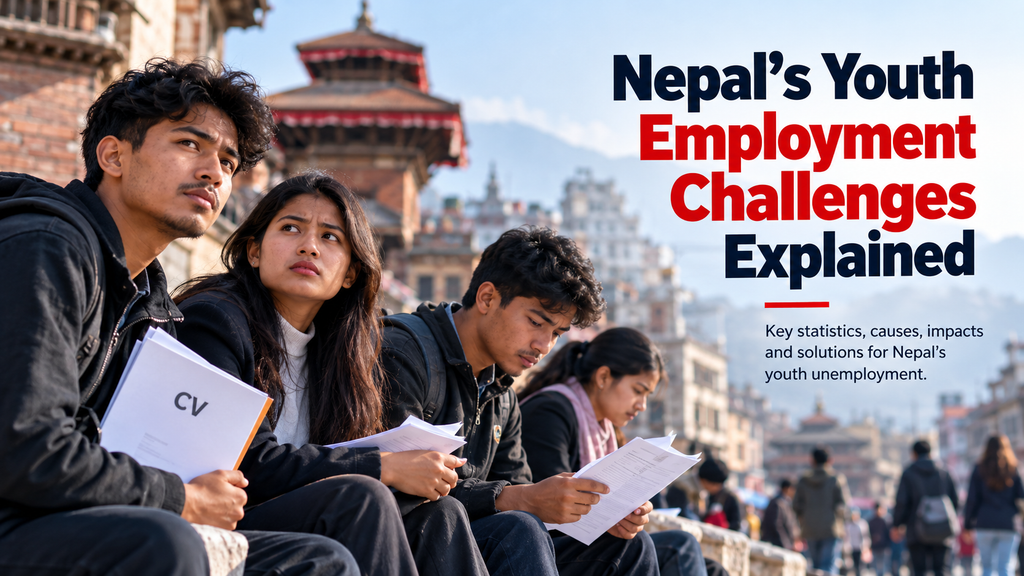
Nepal youth unemployment illustrated by young Nepalese jobseekers holding CVs in Kathmandu
Illustration of young Nepalese jobseekers facing employment challenges in Nepal.

By Eleven Nepal | 14 October 2026

Nepal youth unemployment continues to affect graduates, skilled workers and first-time jobseekers across the country.

According to World Bank data based on International Labour Organization estimates, Nepal’s youth unemployment rate among people aged 15–24 reached 20.6% in 2025. The figure highlights the difficulties young people face when entering the labour market.

Understanding the causes of unemployment, the skills gap and foreign labour migration is essential to building a stronger economic future.

Nepal Youth Unemployment: What Do the Statistics Show?

The World Bank reports a youth unemployment rate of 20.6% in 2025, compared with an overall unemployment rate of 10.5%.

These figures are modelled estimates rather than the results of a new nationwide labour force survey. They measure unemployment among people participating in the labour force, not all young people.

Nepal’s 2017/18 Labour Force Survey also demonstrated the longstanding difficulties facing younger workers. People aged 15–24 represented 38.1% of the unemployed population at that time.

However, that historical figure describes the share of unemployed people who were young, not the youth unemployment rate.

What Causes Youth Unemployment in Nepal?

The causes of Nepal youth unemployment include limited job creation, skills mismatches and difficulties accessing secure employment.

1. Limited Job Creation

One of Nepal’s biggest challenges is generating sufficient productive employment within the country.

According to the World Bank’s August 2025 analysis, weak industrial development, infrastructure constraints and limited private-sector opportunities continue to restrict job creation.

Agriculture, tourism, manufacturing and digital services offer potential, but stronger investment and business development are necessary.

2. Education and Skills Mismatch

Addressing Nepal youth unemployment requires stronger cooperation between universities, training institutions and employers.

Many graduates face difficulties transitioning from education into employment.

Employers may require practical experience, technical knowledge, communication skills and digital competencies that graduates have not yet developed.

In February 2026, the ILO highlighted skills mismatches, underemployment and weak connections between jobseekers and employers as major labour-market concerns.

3. Informal Employment and Low Job Security

Finding employment does not always guarantee financial stability.

The World Bank reported in 2025 that approximately 82% of Nepal’s workforce was engaged in informal employment.

Informal workers can face uncertain earnings, limited social protection and fewer opportunities for professional advancement.

This demonstrates why improving job quality is as important as reducing unemployment.

4. Foreign Employment and Migration

Nepal youth unemployment is one factor influencing decisions to seek employment opportunities overseas.

Limited domestic opportunities encourage many young Nepalese to pursue employment overseas.

According to a 2026 IMF assessment, approximately 2.2 million Nepalese were living abroad at the time of the 2021 census.

Foreign employment supports households through remittances, but sustained dependence on overseas opportunities also highlights weaknesses in domestic job creation.

Migration itself is not necessarily negative. The challenge is ensuring that working abroad becomes a genuine choice rather than an economic necessity.

How Does Youth Unemployment Affect Nepal?

High youth unemployment can have consequences beyond individual financial hardship.

It may delay financial independence, increase household dependence and encourage migration among skilled workers.

Businesses can also struggle to find appropriately trained employees despite large numbers of jobseekers.

Over time, these difficulties can limit productivity, discourage investment and reduce Nepal’s ability to benefit from its young population.

How Can Nepal Reduce Youth Unemployment?

Strengthen Practical Education

Universities and training institutions should work more closely with employers to provide internships, apprenticeships and industry-relevant training.

A World Bank project reported in October 2025 that approximately 77% of participants in supported vocational training programmes entered wage employment or self-employment within six months.

This demonstrates the potential of targeted skills programmes, although the results should not be assumed to represent all training initiatives.

Support Entrepreneurship and Small Businesses

Improved access to finance, mentoring, infrastructure and transparent business regulations could help young entrepreneurs establish sustainable enterprises.

Tourism, food production, technology, agriculture and local services offer opportunities for new businesses.

Expand Digital Employment Opportunities

Digital skills can help young people explore remote employment, freelancing and technology-related careers.

However, these opportunities require reliable internet access, practical training, payment infrastructure and awareness of online employment scams.

Improve Employment Services

Government agencies, educational institutions and employers should strengthen career counselling, job matching and employment information systems.

In February 2026, the ILO and Nepal’s Ministry of Labour, Employment and Social Security launched training to improve public employment services.

Such initiatives could help connect jobseekers with suitable opportunities when supported by effective implementation.

What Can Young Nepalese Do to Improve Their Employment Prospects?

Although national unemployment requires structural economic solutions, individuals can improve their preparedness by developing practical skills, gaining experience through internships and building professional networks.

Learning digital tools, improving communication skills and exploring credible training programmes may also strengthen employability.

Young people should carefully evaluate employment offers, particularly those involving upfront payments or promises of guaranteed online earnings.

Conclusion

Reducing Nepal youth unemployment will require long-term investment in education, entrepreneurship and productive domestic jobs.

Nepal youth unemployment is not simply a shortage of jobs. It reflects deeper challenges involving education, investment, informal employment and limited domestic economic opportunities.

Reducing unemployment will require cooperation between government, businesses, educational institutions and young people themselves.

Nepal’s long-term economic progress depends on creating productive, secure and rewarding opportunities that allow young Nepalese to build their futures at home or abroad by choice.

Frequently Asked Questions

What is the youth unemployment rate in Nepal?

The World Bank’s ILO-modelled estimate puts Nepal’s unemployment rate among people aged 15–24 at 20.6% in 2025.

Why do young Nepalese struggle to find jobs?

Major reasons include insufficient quality job creation, skills mismatches, limited practical experience and barriers to private-sector development.

Why do many Nepalese seek employment abroad?

Overseas employment can offer higher earnings and opportunities that may be difficult to access domestically.

How can Nepal create more jobs for young people?

Improving investment conditions, vocational education, entrepreneurship support, infrastructure and employment services could help expand opportunities.

Can freelancing reduce youth unemployment in Nepal?

Freelancing can provide additional income opportunities for some skilled workers, but it is not a substitute for broad-based job creation and secure employment.

Nepal Floods 2026: Shocking Death Toll & Latest Updates

1
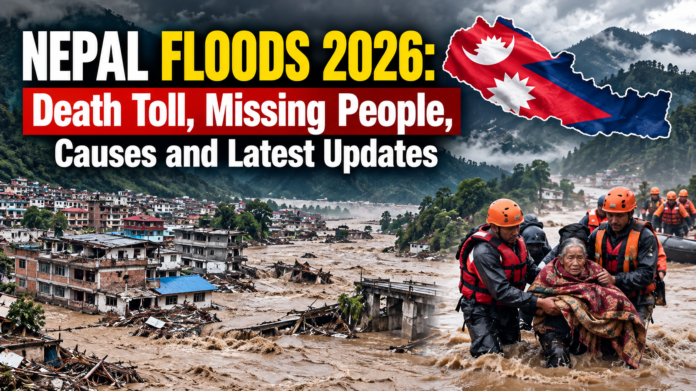
Nepal flood 2026
Nepal flood 2026

Nepal Floods 2026: Death Toll, Missing People, Causes and Latest Updates

URL slug: /nepal-floods-2026-death-toll-latest-updates/

Nepal is facing a devastating flood and landslide emergency after a catastrophic high-altitude event triggered powerful flash flooding across northern parts of the country. Hundreds of people have died, thousands remain missing and major roads, bridges, hydropower projects and communities have been damaged.

LIVE UPDATE: The reported death toll and number of missing people continue to change as search, rescue, recovery and identification operations remain underway.

Nepal Floods 2026: Latest Situation

Nepal is continuing a large-scale search and rescue operation following catastrophic flooding that began on 26 August 2026 in the country’s northern Himalayan region.

The disaster was triggered after an ice-rock avalanche and associated glacial event sent a massive power volume of water, rocks and debris into the river system near the Nepal-China border. The resulting torrent travelled downstream, causing severe flooding and destruction along river corridors including the Bhotekoshi and Trishuli systems.

The impact has been particularly severe in parts of Rasuwa and Nuwakot, where communities, roads, bridges and hydropower infrastructure have been badly affected.

As rescue teams continue searching damaged settlements and hydropower facilities, the number of confirmed deaths and missing people continues to change.


Nepal Floods 2026 Death Toll and Missing People

At least 939 deaths have been reported in Nepal in the latest reporting available on 31 August.

However, casualty figures differ between sources and continue to be revised.

Reuters previously cited Nepal’s National Disaster Risk Reduction and Management Authority (NDRRMA) as reporting 903 deaths and 4,247 people missing. Later reporting placed the Nepal death toll at at least 939.

The difference reflects the rapidly changing situation on the ground. Bodies are still being recovered, victims are being identified and authorities are continuing to reconcile reports from different districts and rescue teams.

For this reason, Eleven Nepal will display casualty figures together with their source and update time, rather than presenting different reports as though they were a single confirmed number.

Current reported figures

CategoryLatest reported figure
Deaths in Nepal939+
Official NDRRMA figure previously reported903
Missing in Nepal4,247+
Deaths reported in Tibet16
Rescue operationsOngoing

Figures can change as authorities continue search, recovery and identification operations.

Why Are the Death Toll Figures Different? (Nepal Flood 2026)

Readers may see different numbers reported by government authorities, news organisations and international agencies.

This does not necessarily mean that one source is reporting false information.

During a major disaster, casualty figures can change for several reasons.

First, rescue teams may recover victims in remote or inaccessible areas hours or days after the initial event. Some victims may initially be listed as missing before being confirmed alive or deceased.

Second, authorities in different districts may report information at different times. A national disaster-management database may therefore be updated after local authorities have already provided figures to journalists.

Third, unidentified victims may not immediately be included in an official identified-death total.

Eleven Nepal therefore recommends reading every casualty figure together with its source, date and time.

What Caused the Nepal Floods 2026?

The disaster began on 26 August 2026 after an ice-rock avalanche and glacial event in the Himalayan border region.

The event sent a huge amount of water, rock and debris into the river system. The sudden increase in water and sediment created a powerful downstream flow that rapidly overwhelmed areas along the river corridor.

The combination of high-speed water, rocks and debris made the flooding particularly destructive.

Unlike conventional river flooding, a flash flood of this type can arrive with very little warning. Large boulders, trees, mud and other debris can also be carried by the water, dramatically increasing the destructive force.

Reuters reported that the immediate disaster was associated with an ice-rock avalanche entering the Lhende Khola river. The resulting flooding then caused extensive destruction downstream.


Rasuwa Among the Worst-Affected Areas

Rasuwa, in northern Nepal, has emerged as one of the central areas of the disaster.

The district’s mountainous geography makes emergency response particularly difficult. Roads and bridges are essential for connecting remote communities with larger towns and emergency facilities, meaning damage to transport infrastructure can quickly isolate affected populations.

The flooding also struck areas containing important hydropower infrastructure.

Rescue teams have been working to reach workers and communities affected by the flood while dealing with damaged roads, unstable terrain and continuing risks.


Nuwakot and the Trishuli River Corridor

Neighbouring Nuwakot has also been heavily affected.

The Trishuli river system is an important transport, settlement and hydropower corridor. Flooding along the river has damaged infrastructure and complicated access to affected locations.

The destruction of bridges and roads means that emergency teams may have to use alternative routes, helicopters or other specialised equipment to reach isolated communities.

The disaster demonstrates the vulnerability of settlements and infrastructure built along Nepal’s steep Himalayan river valleys.


Hydropower Projects at the Centre of Rescue Efforts

One of the most difficult aspects of the disaster has been the impact on Nepal’s hydropower industry.

Several hydropower projects are located along rivers and steep mountain valleys. These locations provide the water resources necessary for electricity generation but can also expose infrastructure and workers to floods, landslides and other geological hazards.

Reuters reported that rescue teams were focusing on several hydropower facilities where workers were feared trapped or missing.

Projects mentioned in reporting include:

  • Upper Trishuli-1
  • Upper Trishuli-3A
  • Upper Trishuli-3B
  • Chilime
  • Langtang Khola
  • Mailung Khola

Associated Press reported that around 900 workers connected to 12 hydropower projects in Rasuwa and Nuwakot were missing or unaccounted for, with some believed to be trapped inside tunnels.

The situation has made hydropower facilities a major focus of the continuing rescue operation.

Workers Trapped in Hydropower Tunnels

Hydropower tunnels present a particularly difficult rescue challenge.

Workers inside tunnels can become isolated when entrances are blocked by mud, rocks, water or collapsed infrastructure.

Rescuers must first determine whether sections of the tunnel remain structurally safe before entering.

Heavy machinery, specialist rescue equipment and trained teams may therefore be required.

The situation is further complicated by the mountainous terrain and damage to roads leading to the affected sites.

International expertise has also been involved in some rescue operations, including assistance from neighbouring countries.


Roads and Bridges Destroyed

The floods have caused extensive damage to Nepal’s transportation infrastructure.

Roads and bridges are particularly important in the Himalayan region because many settlements depend on a limited number of access routes.

When a bridge is destroyed or a road is washed away, entire communities can become temporarily isolated.

The destruction also affects the emergency response itself.

Rescue teams require functioning roads to transport:

  • food;
  • drinking water;
  • medical supplies;
  • fuel;
  • rescue equipment;
  • heavy machinery.

Damage to electricity and communications infrastructure can further complicate the situation.


Search and Rescue Operations

Nepal’s security forces and emergency responders have been conducting large-scale search and rescue operations.

Teams are searching affected settlements, river corridors, damaged infrastructure and hydropower facilities.

Helicopters have become particularly important in areas where roads and bridges are no longer usable.

Rescuers face several dangers of their own, including unstable slopes, damaged buildings, fast-moving water and the possibility of additional landslides.

Authorities must therefore balance the urgency of reaching missing people with the safety of rescue personnel.

Workers Trapped in Hydropower Tunnels

Hydropower tunnels present a particularly difficult rescue challenge.

Workers inside tunnels can become isolated when entrances are blocked by mud, rocks, water or collapsed infrastructure.

Rescuers must first determine whether sections of the tunnel remain structurally safe before entering.

Heavy machinery, specialist rescue equipment and trained teams may therefore be required.

The situation is further complicated by the mountainous terrain and damage to roads leading to the affected sites.

International expertise has also been involved in some rescue operations, including assistance from neighbouring countries.


Roads and Bridges Destroyed

The floods have caused extensive damage to Nepal’s transportation infrastructure.

Roads and bridges are particularly important in the Himalayan region because many settlements depend on a limited number of access routes.

When a bridge is destroyed or a road is washed away, entire communities can become temporarily isolated.

The destruction also affects the emergency response itself.

Rescue teams require functioning roads to transport:

  • food;
  • drinking water;
  • medical supplies;
  • fuel;
  • rescue equipment;
  • heavy machinery.

Damage to electricity and communications infrastructure can further complicate the situation.


Nepal Floods 2026 Search and Rescue Operations

Nepal’s security forces and emergency responders have been conducting large-scale search and rescue operations.

Teams are searching affected settlements, river corridors, damaged infrastructure and hydropower facilities.

Helicopters have become particularly important in areas where roads and bridges are no longer usable.

Rescuers face several dangers of their own, including unstable slopes, damaged buildings, fast-moving water and the possibility of additional landslides.

Authorities must therefore balance the urgency of reaching missing people with the safety of rescue personnel.

Nepal Floods 2026 Latest Update

31 August 2026

Rescue and recovery operations remain ongoing across affected areas of northern Nepal.

The latest reporting indicates that the death toll in Nepal has reached at least 939, while thousands of people remain missing.

At the same time, official figures cited by Reuters have recorded a lower confirmed death toll, demonstrating why casualty numbers should be accompanied by their source and timestamp.

The situation remains fluid and further updates are expected as emergency teams continue searching affected areas and hydropower facilities.


Nepal Floods 2026 FAQs

How many people have died in the Nepal floods?

At least 939 deaths have been reported in Nepal in the latest reporting available on 31 August 2026. However, the latest official figure cited by Reuters was lower, at 903 deaths, meaning casualty figures remain subject to verification and further updates.

How many people are missing?

Thousands of people remain missing. Reuters cited an NDRRMA figure of 4,247 missing people in Nepal, while wider cross-border reporting has produced higher combined figures.

When did the Nepal floods happen?

The major disaster began on 26 August 2026 following an ice-rock avalanche and associated glacial event in the Himalayan region.

Which areas were most affected?

Rasuwa and Nuwakot are among the areas most heavily affected, particularly along river corridors connected to the Bhotekoshi and Trishuli systems.

Why are so many hydropower workers missing?

Several hydropower projects were affected by floodwater, mud and debris. Some workers were inside tunnels or facilities when the disaster occurred, making rescue operations particularly difficult.

Is the Nepal flood disaster over?

No. Search, rescue, recovery and damage-assessment operations are still continuing.

Will the death toll increase?

It is possible. Authorities are still searching for missing people and recovering victims. The official death toll may therefore change as new information is verified.


Sources and Methodology

Eleven Nepal uses official government information and reporting from established international news organisations to track the disaster.

Casualty figures are presented with their source and update time whenever possible.

Because search, rescue, recovery and victim-identification operations remain ongoing, figures may change after publication.

Key sources consulted include:

  • Nepal Disaster Risk Reduction and Management Authority (NDRRMA)
  • Nepal government and security agencies
  • Reuters
  • Associated Press
  • International humanitarian organisations
  • Other verified reporting

Editorial note: Where two credible sources report different figures, Eleven Nepal does not automatically combine them. Instead, the article identifies which figure is official, which is independently reported and when each figure was published.


Editorial Disclaimer

This article is a developing report. Information may change as authorities release new figures and rescue teams continue their operations. Eleven Nepal will update this article when significant new information becomes available.

contact us for more details

Last updated: 31 August 2026

RSP Candidates in the New Government of Nepal: Full Overview and Analysis (2026)

19
RSP Candidates in the New Government of Nepal: Full Overview and Analysis (2026)

RSP candidates in new government of Nepal.

RSP Candidates in the New Government of Nepal: Full Overview and Analysis (2026)

Introduction

RSP candidates in the new government of Nepal.

The formation of a new government in Nepal always brings attention to political parties and their chosen candidates. One of the most talked-about parties in recent years is the Rastriya Swatantra Party (RSP), which has gained strong support, especially among young voters.

With the new government structure, many are asking: who are the key candidates from RSP, and what role will they play in shaping Nepal’s future?

In this article, we will explore the candidates of RSP in the new government, their significance, and what this means for the country.


What is RSP?

The Rastriya Swatantra Party (RSP) is a relatively new political party in Nepal that has quickly gained popularity due to its focus on transparency, anti-corruption, and youth engagement.

Led by Rabi Lamichhane, the party has positioned itself as an alternative to traditional political forces. Many young Nepalis see RSP as a symbol of change and reform.


RSP Candidates in the New Government

In the new government formation, RSP has nominated several candidates for key positions. These candidates are seen as representatives of a new generation of leadership in Nepal.

Key Highlights of RSP Candidates:

  • Focus on transparency and accountability
  • Strong connection with youth and public concerns
  • Backgrounds in media, business, and social sectors
  • Commitment to reform and governance improvement

While the exact positions and ministries may vary, RSP candidates are expected to play important roles in decision-making and policy development.

RSP Candidates in the New Government of Nepal: Full Overview and Analysis (2026)


Why RSP Candidates Matter

The inclusion of RSP candidates in the government is significant for several reasons.

First, it represents a shift in Nepal’s political landscape. Traditional parties have dominated politics for decades, but RSP’s rise shows that voters are looking for change.

Second, RSP candidates bring a fresh perspective. Many of them are not career politicians, which can lead to new ideas and approaches.

Third, their presence increases accountability. Since RSP built its reputation on transparency, there is higher public expectation for performance.


Impact on Youth and Society

One of the biggest strengths of RSP is its connection with young people. Many students and young professionals feel represented by the party.

The inclusion of RSP candidates in the government could lead to:

  • more youth-focused policies
  • better employment opportunities
  • increased focus on digital growth and innovation

This is especially important in a country where many young people are seeking opportunities abroad.


Challenges Ahead

Despite the excitement, RSP candidates will face several challenges.

  • Adapting to government systems
  • Working with other political parties
  • Delivering results under public pressure
  • Maintaining transparency in a complex system

Success will depend on how effectively they can handle these challenges.


Public Expectations

The expectations from RSP candidates are very high. People expect:

  • quick action on corruption
  • better governance
  • real improvements in daily life

If these expectations are not met, public trust could decrease.


Future of RSP in Nepal Politics

The performance of RSP candidates in this government will shape the future of the party.

If they succeed, RSP could become a major political force in Nepal. If they fail, it could affect their credibility.

This makes the current government period very important for the party.RSP Candidates in the New Government of Nepal


Conclusion- RSP Candidates in the New Government of Nepal

The inclusion of RSP candidates in the new government of Nepal marks an important moment in the country’s political journey. It reflects a growing demand for change, transparency, and youth representation.

While there are many challenges ahead, the performance of these candidates will determine whether RSP can truly transform Nepal’s political landscape.


FAQ

What is RSP in Nepal?

RSP (Rastriya Swatantra Party) is a new political party focused on transparency and reform.

Who leads RSP?

RSP is led by Rabi Lamichhane.

Why are RSP candidates important?

They represent a new generation of leadership and bring fresh ideas to governance

Top 10 Skills to Learn in 2026 for Students (Future-Proof Guide)

0
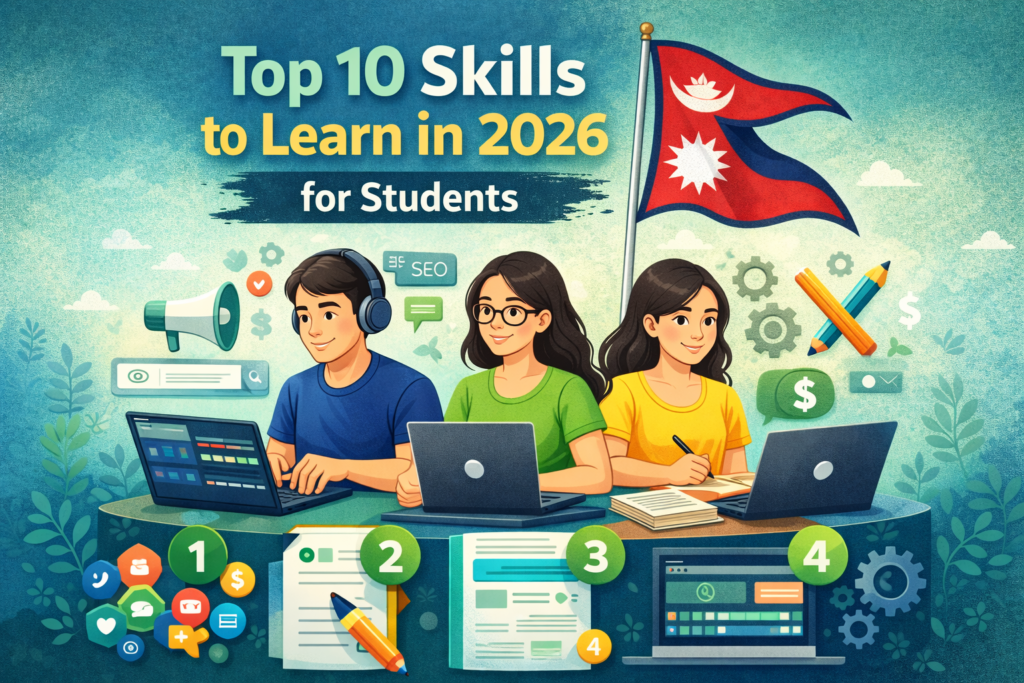
Top 10 skills to learn in 2026 for students

Introduction:

Choosing the right skills to learn in 2026 can help students prepare for changing career opportunities and develop practical experience.

Learning the right skills can help students prepare for employment, explore freelancing, and become more confident in a changing job market. Whether you are studying in Nepal or elsewhere, developing practical skills alongside your education can create opportunities for personal and professional growth.

Technology, artificial intelligence, and digital platforms are changing how people study and work. However, technical knowledge alone is not enough. Communication, critical thinking, financial awareness, and problem-solving are equally important.Students interested in building a digital career can also explore our Technology articles for more information about emerging technologies and online opportunities.

In this guide, Eleven Nepal explores 10 valuable skills to learn in 2026 for students, including what each skill involves, how to start learning, and where it might lead.

Why Should Students Learn New Skills in 2026?

Understanding which skills to learn in 2026 is especially important for students who want to combine academic knowledge with practical abilities.Academic qualifications remain important, but employers also look for candidates who can apply their knowledge in real situations.

Developing practical skills can help students:

  • Improve their confidence and employability.
  • Explore internships, part-time work, and freelance opportunities.
  • Build a portfolio that demonstrates their abilities.
  • Adapt to technological and workplace changes.
  • Develop independence and stronger decision-making abilities.

For Nepali students, digital skills can also make it easier to explore opportunities beyond their immediate location. However, online work requires preparation, reliable internet access, and an understanding of payment and platform requirements.The following skills to learn in 2026 cover digital technology, creativity, communication, and essential professional abilities.

1. Digital Marketing

Digital marketing involves promoting products, services, and organisations through online channels.

Businesses use websites, search engines, social media, and email to communicate with customers. Students who understand these channels can contribute to marketing projects or develop their own online initiatives.

What to learn:

  • Search engine optimisation (SEO).
  • Social media marketing.
  • Content strategy and planning.
  • Email marketing.
  • Website analytics.

How to start: Create a practice social media campaign for a small business or personal project. Learn how to define an audience, plan posts, and evaluate engagement.

Free learning resource: Google Skillshop.

Possible opportunities: Marketing assistant, social media coordinator, content creator, or freelance marketing support.

2. Content Writing and Research

Content writing involves producing clear, informative, and engaging material for websites, blogs, newsletters, and other digital platforms.

Good writing requires more than correct grammar. Writers need to understand their audience, research information, organise ideas, and verify facts.

What to learn:

  • Article and blog writing.
  • Research and fact-checking.
  • SEO fundamentals.
  • Editing and proofreading.
  • Responsible use of AI writing tools.

How to start: Choose a topic you understand, research it using credible sources, and publish a useful article. Build a portfolio containing several examples of your work.

Possible opportunities: Blog writer, content assistant, copywriter, or editorial freelancer.

AI tools can help with outlining and editing, but students should check facts and contribute their own understanding rather than publishing unverified generated content.

3. Graphic Design

Graphic design combines creativity and visual communication. It is useful for businesses, educational projects, events, and social media.

Beginners can start with accessible design tools before progressing to more advanced software.

What to learn:

  • Typography and colour combinations.
  • Layout and visual hierarchy.
  • Social media graphics.
  • Presentation design.
  • Basic branding.

How to start: Use Canva to create five sample designs, such as a poster, a YouTube thumbnail, and an event announcement.

Possible opportunities: Junior designer, social media designer, or freelance creative assistant.

A strong portfolio and understanding of design principles matter more than simply knowing how to operate software.

4. Video Editing

Video editing helps turn recorded footage into clear and engaging content.

Students can use this skill for educational videos, promotional material, interviews, and social media projects.

What to learn:

  • Cutting and arranging footage.
  • Audio editing.
  • Captions and subtitles.
  • Colour correction.
  • Storytelling and pacing.

How to start: Record a short educational video on your phone and edit it into a one-minute presentation.

Tools such as CapCut and DaVinci Resolve offer ways to practise, although features and device requirements vary.

Possible opportunities: Video editing assistant, content production assistant, or freelance editor.

5. Web Development and Website Management

Web development involves creating and maintaining websites. It combines technical knowledge, design, and problem-solving.

Students can begin with basic website-building tools before learning programming languages.

What to learn:

  • HTML and CSS.
  • Basic JavaScript.
  • WordPress website management.
  • Responsive design.
  • Website accessibility and performance.

How to start: Build a simple personal portfolio website containing an introduction, your projects, and contact information.

Free learning resource: freeCodeCamp.

Possible opportunities: Website assistant, junior web developer, WordPress support, or freelance website maintenance.

6. Freelancing and Client Management

Freelancing means providing services independently to clients rather than working exclusively as a traditional employee.

It is important to understand that freelancing is a way of working, not a guaranteed source of income. Students generally need a marketable skill before they can offer a service.

What to learn:

  • Communicating with clients.
  • Preparing proposals and quotations.
  • Managing deadlines.
  • Defining project requirements.
  • Handling feedback and revisions.

How to start: Choose a service you can provide competently, create two or three portfolio samples, and practise writing a professional proposal.

Students interested in online platforms should check age requirements, identity verification rules, fees, and payment availability in their country before registering.

Possible opportunities: Independent work in writing, design, development, editing, or marketing.

7. Artificial Intelligence and Digital Literacy

Artificial intelligence is becoming part of everyday study and professional workflows. Students can benefit from understanding what AI tools can do and where their limitations lie.

Learning to use AI responsibly is more valuable than simply copying generated answers.

What to learn:

  • AI fundamentals.
  • Writing effective prompts.
  • Checking AI-generated information.
  • Spreadsheet and data skills.
  • Basic automation.
  • Data privacy and digital security.

How to start: Use an AI tool to organise a study plan or explain a difficult concept. Then verify the output using textbooks, official resources, or other reliable references.

Free learning resource: Elements of AI.

Possible opportunities: AI-assisted administrative work, digital operations, research support, and other roles where AI literacy is useful.

AI knowledge may improve adaptability, but no single skill can guarantee future employment.

8. Communication Skills

Communication is essential in almost every career. Students need to explain ideas, listen carefully, work in teams, and express themselves professionally.

What to learn:

  • Public speaking.
  • Professional email writing.
  • Active listening.
  • Presentation skills.
  • Teamwork and constructive feedback.

How to start: Practise delivering a three-minute presentation about a topic you know. Record yourself and identify areas for improvement.

For Nepali students, developing confidence in both Nepali and English communication may be useful depending on their career goals.

Possible opportunities: Communication skills support careers in business, hospitality, education, customer service, management, and many other fields.

9. Financial Literacy

Financial literacy helps students understand how to manage money and make informed financial decisions.

It is useful whether someone receives a monthly allowance, earns from part-time employment, or plans to start a business.

What to learn:

  • Creating a monthly budget.
  • Tracking income and expenses.
  • Building savings habits.
  • Understanding borrowing costs.
  • Recognising scams and financial risks.
  • Basic concepts of investing.

How to start: Track your spending for 30 days and divide expenses into essential and non-essential categories. Set a realistic savings target.

Students should understand that investing involves risk and should avoid promises of quick or guaranteed profits.

10. Critical Thinking and Problem-Solving

Critical thinking involves evaluating information carefully before making decisions. Problem-solving means identifying challenges and developing practical solutions.

These skills are useful in education, employment, entrepreneurship, and everyday life.

What to learn:

  • Identifying the causes of a problem.
  • Comparing possible solutions.
  • Evaluating evidence.
  • Making informed decisions.
  • Learning from mistakes.

How to start: Identify a small problem at your college or in your community. Research its causes, suggest possible solutions, and explain which option appears most practical.

Possible opportunities: These abilities support work across technology, business, healthcare, hospitality, education, and other industries.

Which Skill Should Students Learn First?

The best starting point depends on your interests, available resources, and long-term goals.

Your interestSkill to consider
Writing and researchingContent writing
Art and creativityGraphic design
Social media and businessDigital marketing
Computers and codingWeb development
Videos and storytellingVideo editing
Technology and productivityAI and digital literacy
Leadership and teamworkCommunication
Managing personal moneyFinancial literacy

You do not need to master all ten skills. Starting with one practical skill and developing it consistently is often more manageable.

How to Start Learning Skills for Free

Students can begin learning without immediately paying for expensive courses.

Step 1: Choose one skill. Select something that interests you and fits your career goals.

Step 2: Find reliable learning materials. Explore free courses, official documentation, educational videos, and reputable learning platforms.

Step 3: Create a learning schedule. Even 30–45 minutes of focused practice on most days can help build consistency.

Step 4: Complete a practical project. Apply your knowledge by creating something you can demonstrate to others.

Step 5: Build a portfolio. Collect your strongest projects and explain what you learned.

Step 6: Request feedback. Ask teachers, experienced professionals, or peers to review your work.

Step 7: Keep improving. Update your skills as tools, technologies, and professional requirements change.

Common Mistakes Students Should Avoid

Students sometimes spend too much time collecting course certificates without practising what they have learned.

Other common mistakes include:

  • Trying to learn several complex skills simultaneously.
  • Expecting immediate earnings after completing a short course.
  • Copying projects without understanding the work.
  • Paying for expensive training without checking its quality.
  • Ignoring communication and professional behaviour.
  • Trusting unrealistic online income claims.

Practical experience, patience, and consistent improvement are more useful than chasing every new trend.

Conclusion

Choosing the right skills to learn in 2026 can help students become better prepared for further education, employment, entrepreneurship, and independent work.The most valuable skills to learn in 2026 are those that match your interests, career goals, and willingness to keep improving.

Digital marketing, writing, graphic design, video editing, web development, and AI literacy offer different ways to develop technical abilities. Communication, financial literacy, and critical thinking provide a foundation that remains useful across many careers.

For students in Nepal, the most important first step is to identify a realistic goal, choose a relevant skill, and begin practising with the resources available.

You do not need to learn everything at once. Start with one skill, create meaningful projects, and build your abilities over time.

Frequently Asked Questions

What are the best skills to learn in 2026 for students?

Useful options include digital marketing, content writing, graphic design, video editing, web development, AI literacy, communication, and problem-solving. The best choice depends on your interests and career plans.

Can students in Nepal learn digital skills for free?

Yes. Students can use free educational resources, online tutorials, official software documentation, and selected courses offered by learning platforms. Internet access and equipment requirements vary by subject.

Which skills can help students explore freelancing?

Writing, graphic design, video editing, website management, and digital marketing can support freelance services. However, finding paying clients requires practical ability, a portfolio, communication skills, and consistent effort.

Is AI an important skill for students in 2026?

AI literacy can be useful for research, productivity, and digital work. Students should also understand the limitations of AI systems, verify information, and protect personal data.

How long does it take to learn a new skill?

The time required depends on the skill, its complexity, your previous experience, and how regularly you practise. Basic familiarity may develop relatively quickly, while professional competence generally requires sustained learning and real projects.

Should students learn more than one skill?

Yes, but it is often better to develop a strong foundation in one skill before adding complementary abilities. For example, content writing and SEO or graphic design and video editing can work well together.

Fiverr vs Upwork: Which is Better for Beginners? (Complete Guide 2026)

0
how to get your first client on Fiverr
fiverr vs upwork

Fiverr vs Upwork: 7 Key Differences for Beginners in 2026

Introduction

If you are planning to start freelancing in 2026, you may be wondering: Fiverr vs Upwork — which platform is better for beginners?

Both platforms connect freelancers with clients around the world, but they offer different ways of finding work, managing projects, and building a professional reputation.

For students and beginners in Nepal, choosing the right platform can make the learning process more manageable. However, neither Fiverr nor Upwork guarantees clients or regular income.

In this guide, Eleven Nepal compares Fiverr vs Upwork in seven important areas, including competition, fees, earning potential, and opportunities for new freelancers.

What Is Fiverr and How Does It Work?

Fiverr is an online marketplace where freelancers can advertise services through listings called Gigs.

For example, a graphic designer might create a Gig offering YouTube thumbnail design, while a writer could offer blog-writing services.

Clients can discover these listings, compare freelancers, and place orders or contact sellers to discuss their requirements.

Advantages of Fiverr

  • Freelancers can showcase clearly defined services.
  • Clients can discover services through marketplace searches.
  • Service packages can make pricing easier to understand.
  • Beginners can create a portfolio around a specific skill.

Challenges of Fiverr

New sellers may struggle to appear in search results or attract their first reviews. Creating a Gig does not guarantee that customers will find or purchase it.

What Is Upwork and How Does It Work?

Upwork is a freelancing marketplace where clients can post projects and freelancers can submit proposals.

For example, a business might advertise a website development project. Interested freelancers can explain their experience, provide examples of previous work, and submit an offer.

Upwork also supports other ways of connecting clients and freelancers, including invitations and predefined services.

Advantages of Upwork

  • Freelancers can search for projects matching their skills.
  • Clients may offer short-term or ongoing work.
  • Proposals allow freelancers to explain their approach.
  • The platform supports different project and contract arrangements.

Challenges of Upwork

Freelancers may need to spend time preparing proposals without receiving a response. Some applications also require Connects, which can involve a cost.

Fiverr vs Upwork: 7 Key Differences

1. How Freelancers Find Clients

Fiverr: Freelancers typically create Gigs that clients can discover and purchase.

Upwork: Freelancers commonly search for relevant jobs and submit proposals, although clients can also contact them directly.

Which is better? Fiverr may suit someone offering a clearly defined service. Upwork may suit someone comfortable pitching for specific projects.

2. Competition for Beginners

Both platforms have substantial competition, especially in popular categories such as logo design, writing, video editing, and virtual assistance.

On Fiverr, new sellers need to create appealing listings and demonstrate the value of their services.

On Upwork, freelancers need strong profiles, relevant portfolios, and personalised proposals.

Which is better? Neither platform is automatically easier. Your experience, niche, portfolio, and communication skills can influence your results.

3. Creating a Profile and Getting Started

Fiverr focuses on setting up a seller profile and creating service listings.

Upwork focuses on professional profiles, skills, work history, and proposals for relevant projects.

Both platforms have account eligibility, verification, and platform requirements that may change.

Which is better? Fiverr’s Gig-based approach may feel more straightforward for someone who already knows exactly which service they want to sell.

4. Service Fees and Costs

Understanding platform fees is important before accepting work.

Fiverr generally credits sellers 80% of the purchase amount for completed orders, subject to its applicable terms.

Upwork uses freelancer service fees that can vary depending on the contract. Freelancers may also need Connects to apply for certain projects.

Payment processing, withdrawal methods, currency conversion, and other charges can affect the final amount received.

Before starting, check the current official guidance:

Which is better? Compare the total costs for the type of work you intend to offer, rather than choosing based on a single advertised fee.

5. Earning Potential

In the Fiverr vs Upwork comparison, earning potential is often the biggest concern for beginners.

However, there is no reliable fixed monthly income for new freelancers.

Your earnings depend on factors such as:

  • Your skills and experience.
  • The demand for your service.
  • Your pricing and project scope.
  • Your ability to find and retain clients.
  • Platform fees and payment costs.

Both platforms can support small projects and more substantial professional work.

Which is better? Neither platform guarantees higher earnings. Focus on providing valuable services and building a strong reputation.

6. Types of Projects

Fiverr can be convenient for clearly packaged services, such as designing a poster, editing a short video, or writing a product description.

Upwork may be attractive for projects requiring detailed discussions, customised deliverables, or ongoing collaboration.

However, both platforms support different types of work, so these are general differences rather than strict rules.

Which is better? Choose the platform that matches the way you prefer to deliver your service.

7. Building Long-Term Client Relationships

Repeat clients can be valuable because they already understand your work and communication style.

Fiverr allows sellers to develop relationships through successful orders and repeat purchases.

Upwork supports ongoing contracts and continuing collaborations.

On either platform, delivering quality work, meeting deadlines, and communicating professionally are essential.

Which is better? Both can support long-term client relationships when used effectively.

Fiverr vs Upwork: Quick Comparison Table

FeatureFiverrUpwork
Main approachCreate service GigsApply for projects and receive invitations
Finding clientsMarketplace discoveryJob search, proposals, and invitations
CompetitionHigh in popular categoriesHigh in popular categories
PricingService packages and custom offersHourly or fixed-price arrangements
Application costsNo proposal bidding system for standard GigsSome proposals require Connects
Beginner experienceUseful for defined servicesUseful for freelancers who can pitch
Guaranteed incomeNoNo

Which Is Better for Beginners in Nepal?

For Nepali students who are just starting freelancing, the best choice depends on their skills and available resources.

Fiverr may be a practical starting point if you can create a specific service package, such as social media post design, basic video editing, or presentation design.

Upwork may be more suitable if you have a portfolio and can write proposals explaining how you will solve a client’s problem.

Before choosing either platform, verify the current account eligibility requirements, identity verification process, and available withdrawal methods for Nepal.

You should also understand any applicable tax obligations and avoid sharing sensitive financial information with unverified clients.

How to Get Your First Freelance Client

Whether you choose Fiverr or Upwork, these steps can help you prepare:

  1. Choose one marketable skill. Focus on a service you can deliver reliably.
  2. Build a small portfolio. Create three examples showing your abilities.
  3. Research your target clients. Understand what customers need and how similar services are offered.
  4. Create a professional profile. Describe your skills accurately without inventing experience.
  5. Set realistic prices. Consider your time, platform fees, and project requirements.
  6. Communicate clearly. Ask questions before agreeing to deliverables and deadlines.
  7. Improve through feedback. Learn from completed projects and unsuccessful applications.

For a practical guide, read our article: How to Get Your First Client on Fiverr.

Common Mistakes Beginners Should Avoid

New freelancers often struggle because they focus on earning money before developing a reliable service.

Common mistakes include:

  • Offering skills they have not properly learned.
  • Copying other freelancers’ descriptions or portfolios.
  • Sending identical proposals to every client.
  • Promising unrealistic delivery times.
  • Ignoring platform rules and payment protections.
  • Expecting immediate income.
  • Paying suspicious clients or recruiters to receive work.

Freelancers should be particularly careful with requests to move payments outside the platform or disclose passwords and verification codes.

Frequently Asked Questions

Is Fiverr or Upwork better for beginners?

Fiverr may suit beginners who want to advertise a clearly defined service, while Upwork may suit those who prefer applying for specific projects. Neither guarantees a first client.

Can students in Nepal use Fiverr and Upwork?

Students should check each platform’s current eligibility, age, verification, and country-specific payment requirements before registering.

Which platform pays more, Fiverr or Upwork?

There is no guaranteed winner. Earnings depend on your skills, pricing, clients, projects, and applicable fees.

Can I use Fiverr and Upwork at the same time?

Yes, provided you meet the platforms’ requirements. However, beginners may find it easier to concentrate on one platform while building their first portfolio.

Do I need experience to start freelancing?

Previous paid employment is not always necessary, but you should be able to demonstrate the skills required to complete client projects successfully.

Conclusion

The Fiverr vs Upwork decision depends on your skills, confidence, and preferred working style.

Fiverr offers a Gig-based marketplace where clients can discover your services, while Upwork gives freelancers opportunities to apply for specific projects and communicate directly with potential clients.

For beginners in Nepal, the most important priority is not choosing the platform with the biggest earning promises. It is developing a useful skill, creating a trustworthy portfolio, understanding the costs, and learning how to work professionally with clients.

Start with a skill you can deliver well, choose the platform that suits your approach, and build your freelance career through consistent practice and reliable work.

How to Get Your First Client on Fiverr (Step-by-Step Guide for Beginners)

0

How to Get Your First Client on Fiverr: 7 Helpful Tips for Beginners in 2026

Introduction

Learning how to get your first client on Fiverr can be challenging, especially when you are new to freelancing. Many beginners create an account, publish their first Gig, and expect orders to arrive immediately. However, attracting clients takes more than simply joining a freelancing platform.

For students and beginners in Nepal, Fiverr provides an opportunity to offer digital services to customers around the world. Whether you are interested in content writing, graphic design, video editing, or website development, building the right skills and presenting your services professionally can help you explore online work.

This guide explains how to get your first client on Fiverr through seven practical steps. You will learn how to choose a service, create a professional profile, improve your Gig, communicate with buyers, and avoid common freelancing mistakes.

Although there is no guaranteed method for receiving your first order, following these steps can help you prepare more effectively.

What Is Fiverr and How Does It Work?

Fiverr is an online marketplace that connects freelancers with people and businesses looking for services.

Freelancers can create listings called Gigs to describe the services they offer. Buyers can browse these listings, compare options, contact freelancers, and place orders.

Popular service categories include:

  • Graphic design and branding.
  • Content writing and translation.
  • Video editing and animation.
  • Website development.
  • Digital marketing.
  • Business and administrative support.

For example, a student who knows how to design YouTube thumbnails could create a Gig offering thumbnail design services.

When a buyer places an order, the freelancer completes the agreed work through Fiverr’s system. Payments are handled according to the platform’s terms, including applicable fees and withdrawal requirements.

Fiverr provides tools for managing orders and payments, but freelancers still need to protect their accounts, understand platform rules, and communicate professionally.

How to Get Your First Client on Fiverr: 7 Practical Steps

If you are wondering how to get your first client on Fiverr without previous freelance experience, the following steps provide a realistic starting point.

Step 1: Choose One Skill You Can Offer

If you are researching how to get your first client on Fiverr, choosing a specific service is a useful starting point. Buyers need to understand exactly what you can deliver.Before creating a Fiverr Gig, identify a skill you can use to solve a customer’s problem.

Many beginners make the mistake of offering several unrelated services without developing enough experience in any of them.

Instead, choose one area and practise until you can produce work that meets a client’s requirements.

Some accessible starting points include:

  • Canva social media designs.
  • YouTube thumbnail creation.
  • Blog writing and proofreading.
  • Basic video editing.
  • Presentation design.
  • WordPress content management.

These services may be suitable for beginners to learn, but they still require practice and attention to quality.

For example, if you want to offer Canva design services, create five sample social media posts before advertising your work.

Practical tip: Choose a skill based on your interests, available equipment, and ability to deliver a reliable result.

You can also read our guide to the top 10 skills to learn in 2026 to explore other career-related skills on Eleven Nepal.

Step 2: Create a Professional Fiverr Profile

One important part of learning how to get your first client on Fiverr is understanding what potential buyers search for. Use clear descriptions and relevant keywords rather than making unrealistic promises.Your Fiverr profile helps potential clients understand who you are, what you offer, and whether you can complete their projects.

A clear and honest profile can build trust.

When creating your profile:

  1. Use an appropriate, professional profile image.
  2. Write a short introduction explaining your skills.
  3. Mention the services you can provide.
  4. Include relevant experience or portfolio examples.
  5. Avoid exaggerating your qualifications.

Example Fiverr profile description:

“I am a creative designer specialising in social media graphics and YouTube thumbnails. I focus on clean, engaging designs and clear communication. My goal is to help clients present their content professionally.”

If you are new, you can describe your practice projects instead of claiming paid experience you do not have.

Make sure you also meet Fiverr’s current eligibility and verification requirements.

Step 3: Create a High-Quality Fiverr Gig

A Gig is your service listing on Fiverr. It explains what you offer, what buyers will receive, and how much the service costs.

Creating a useful and accurate Gig is an important part of learning how to get your first client on Fiverr.

Write a Clear Gig Title

Your title should explain the service rather than make unrealistic promises.

For example:

Weak title: I will do graphic design.

Better title: I will design professional YouTube thumbnails for your channel.

The second title explains the specific service more clearly.

Write a Helpful Gig Description

Your description should answer important questions:

  • What service do you provide?
  • What exactly will the buyer receive?
  • What information do you need from the buyer?
  • How many revisions are included?
  • How long will delivery take?

Avoid copying descriptions from other freelancers.

Use Relevant Search Tags

Choose tags that accurately describe your service.

For a thumbnail design Gig, relevant terms might include YouTube thumbnails, thumbnail design, and social media graphics.

Tags can help describe your service to Fiverr’s search system, but they do not guarantee visibility or orders.

Create Attractive Gig Images

Use clear visuals that demonstrate your work.

You can use Canva or another design tool to prepare examples.

Use your own designs or properly licensed materials rather than copying someone else’s portfolio.

Step 4: Set Realistic Prices

Pricing is an important decision for new freelancers.

Charging too much without demonstrating the value of your service may discourage some buyers. However, charging extremely low prices can make it difficult to cover your time and expenses.

Before setting your price, consider:

  • How long the project will take.
  • The complexity of the work.
  • Fiverr’s applicable seller fees.
  • The number of revisions included.
  • The value of your service.

For example, a simple thumbnail design may require less time than a complete branding package.

Research comparable services and choose a price that reflects what you can realistically deliver.

Remember that Fiverr generally credits sellers 80% of completed order amounts under its standard fee structure. Check the current Fiverr Help Centre for applicable terms.

Practical tip: Focus on delivering good value rather than simply offering the cheapest service.

Step 5: Promote Your Fiverr Gig Responsibly

When exploring how to get your first client on Fiverr, remember that promoting your services should focus on reaching relevant audiences rather than sending unsolicited messages.Publishing a Gig does not mean buyers will automatically discover it.

Promoting your services can help potential customers learn about your work.

You can share your Gig through:

  • Your professional LinkedIn profile.
  • Relevant social media pages.
  • A personal portfolio website.
  • Professional communities that permit self-promotion.
  • Your existing network of contacts.

For example, a student offering presentation design could share examples of their work on LinkedIn with a link to their Fiverr Gig.

Avoid spamming groups, sending unsolicited messages, or making misleading claims about your experience.

You should also follow Fiverr’s rules regarding communications and payments.

Step 6: Review Your Gig and Improve Consistently

Consistency matters, but simply logging in every day does not guarantee better search rankings or more orders.

Instead of repeatedly making unnecessary changes, review whether your Gig communicates its value clearly.

Ask yourself:

  • Is my Gig title specific?
  • Does my description explain the deliverables?
  • Are my images professional?
  • Is my pricing reasonable?
  • Does my portfolio demonstrate my abilities?
  • Can buyers easily understand what they are purchasing?

If your listing is not attracting interest, research similar services and identify ways to improve your presentation or offer.

Use any performance information available in your Fiverr account to make informed decisions.

You can also spend time improving your skills and creating stronger portfolio samples while waiting for potential customers.

Step 7: Communicate Professionally With Potential Clients

Professional communication can help turn an enquiry into a successful project.

When a buyer contacts you, read the message carefully and understand their requirements before agreeing to the work.

Good communication includes:

  • Responding politely and clearly.
  • Asking relevant questions.
  • Confirming project deliverables.
  • Explaining realistic deadlines.
  • Being honest about your abilities.
  • Keeping important order communication within Fiverr.

Example response to a potential buyer:

“Hello, thank you for contacting me. I would be happy to discuss your project. Could you please share the design requirements, preferred style, and expected deadline? Once I understand the details, I can confirm whether I can complete the work.”

Never promise results that you cannot deliver.

Good communication and reliable service can also encourage clients to consider working with you again.

How Long Does It Take to Get Your First Fiverr Order?

There is no fixed timeframe for receiving your first order.

Some freelancers may receive enquiries relatively quickly, while others may wait much longer or receive no orders.

Several factors can affect your chances:

  • Demand for your chosen service.
  • Competition within your category.
  • Quality of your portfolio.
  • Clarity of your Gig description.
  • Pricing and project requirements.
  • Buyer preferences and marketplace conditions.

Rather than expecting immediate earnings, focus on improving your work and evaluating whether your service meets a real customer need.

Common Mistakes to Avoid on Fiverr

Understanding how to get your first client on Fiverr also means recognising mistakes that can damage your reputation or reduce buyer confidence.Beginners often make mistakes that reduce their chances of building a sustainable freelance career.

Copying Other Freelancers’ Gigs

Copying descriptions, images, or portfolio work can mislead buyers and create intellectual property problems.

Create original listings that accurately reflect your abilities.

Offering Services Without Enough Practice

Clients expect the work they purchase to meet the agreed requirements.

Before accepting paid projects, practise the service and make sure you can deliver it.

Setting Unrealistic Deadlines

Short delivery times may look attractive, but missing deadlines can damage client relationships.

Set realistic timelines that allow you to complete and review the work.

Ignoring Platform Safety

Be cautious of suspicious links, requests for passwords, verification codes, or payments outside Fiverr.

Use the platform’s official tools and review its safety guidance.

Expecting Guaranteed Income

Freelancing income can be irregular, especially at the beginning.

Do not depend on Fiverr as a guaranteed source of income before you have established a consistent client base.

Fiverr Tips for Students in Nepal

Students in Nepal may be interested in Fiverr because it provides access to an international marketplace.

However, several practical considerations are important.

Internet and equipment: Make sure you have the tools and connectivity required to deliver your service.

Communication: Practise writing clear professional messages, particularly if working with international clients.

Payment methods: Verify the withdrawal options currently supported for your country and account.

Account requirements: Check Fiverr’s age, identity verification, and eligibility rules before registering.

Financial responsibilities: Understand relevant fees, currency conversion costs, and any applicable tax obligations.

Freelancing can provide valuable experience, but students should balance it with their education and other responsibilities.

Fiverr vs Upwork: Which Platform Should You Choose?

Fiverr is not the only freelancing platform available.

Another well-known option is Upwork, where freelancers commonly apply for projects posted by clients.

Fiverr primarily allows freelancers to advertise services through Gigs, while Upwork provides a project-based application process alongside other ways of connecting with clients.

Neither platform guarantees work.

If you are unsure which one suits your skills, read our Fiverr vs Upwork comparison on Eleven Nepal to understand their differences before deciding.

Frequently Asked Questions

How do beginners get their first client on Fiverr?

Beginners can improve their chances by developing a useful skill, creating an honest profile, publishing a clear Gig, building a portfolio, and communicating professionally with potential buyers.

Is Fiverr good for beginners in Nepal?

Fiverr may be a useful option for eligible beginners in Nepal who can provide marketable digital services. However, students should check account requirements, withdrawal availability, and platform rules before starting.

How long does it take to get your first order on Fiverr?

There is no guaranteed timeframe. The time required depends on demand, competition, the quality of your service, and buyer interest.

Can I start Fiverr without previous work experience?

You may be able to offer services without previous paid employment, but you should have the skills and portfolio examples needed to complete client projects.

Is Fiverr free to join?

Fiverr generally allows eligible users to create accounts without an initial registration fee, but seller fees and other applicable charges may apply.

Can I earn money on Fiverr as a student?

Eligible students with suitable skills may earn money by completing freelance projects. However, earnings are not guaranteed and depend on securing and completing paid orders.

There is no guaranteed formula for how to get your first client on Fiverr. Developing your skills, improving your portfolio, and communicating professionally can strengthen your approach.

Conclusion

Understanding how to get your first client on Fiverr begins with developing a valuable skill and presenting it professionally.

The seven steps in this guide cover choosing a service, creating a profile, preparing a high-quality Gig, setting realistic prices, promoting your work, improving your listing, and communicating with buyers.

For beginners in Nepal, Fiverr can be one way to explore freelancing, gain practical experience, and build a professional portfolio.

However, sustainable freelancing requires patience, reliable service, and continuous improvement.

Start with one skill, create work you are proud to show, and focus on providing genuine value to potential clients.

How to Earn Money Online as a Student (Complete Guide 2026)

0
earn money online in Nepal.

7 Smart Ways to Earn Money Online in Nepal as a Student in 2026

Introduction

Are you a student looking for ways to earn money online in Nepal while continuing your studies? With access to the internet and digital learning resources, students can explore opportunities to develop skills, work on projects, and potentially generate income.

However, earning online is not as simple as creating an account and waiting for money. Most legitimate opportunities require practical skills, consistent effort, and an understanding of how online platforms operate.

For students in Nepal, freelancing, online tutoring, content writing, graphic design, and blogging are possible starting points. Each method has different requirements, and income is never guaranteed.

In this guide, Eleven Nepal explores seven practical ways to earn money online in Nepal, including how to begin, which skills to learn, and what mistakes to avoid.

Why Should Students Learn to Earn Online?

Learning to earn money online in Nepal can offer students opportunities beyond traditional part-time employment.

Potential benefits include:

  • Developing useful professional skills.
  • Building a portfolio while studying.
  • Gaining experience communicating with clients.
  • Exploring flexible work opportunities.
  • Improving financial awareness and independence.

Online work can also introduce students to international customers and digital business practices.

However, students should consider their academic responsibilities, internet access, payment options, and the eligibility rules of each platform before starting.

1. Freelancing: Offer Your Digital Skills

Freelancing involves providing services to clients independently, often on a project-by-project basis.

It is one way to earn money online in Nepal for students who have developed a marketable skill.

Popular freelance services include:

  • Graphic design.
  • Blog and content writing.
  • Video editing.
  • Website development.
  • Social media management.
  • Presentation design.

Platforms such as Fiverr and Upwork connect freelancers with potential clients.

How to Start Freelancing

  1. Choose one service you can deliver reliably.
  2. Learn the necessary tools and techniques.
  3. Create three or four portfolio samples.
  4. Research the platform’s eligibility and payment requirements.
  5. Create an accurate professional profile.
  6. Apply for suitable projects or publish a service listing.

Beginners should not expect immediate orders. Finding clients depends on competition, demand, experience, and the quality of the services offered.

For further guidance, read our step-by-step guide to getting your first client on Fiverr. Students who want to earn money online in Nepal through freelancing should begin by developing one useful skill and building a portfolio.

2. Online Tutoring: Teach Subjects You Understand

Online tutoring can be an option for students who are confident in a particular academic subject.

You might help younger students understand mathematics, science, English, or other school subjects.

How to Get Started

  • Choose a subject you understand well.
  • Identify the age group or academic level you can support.
  • Prepare sample lessons and learning materials.
  • Offer lessons through suitable online meeting tools.
  • Explain your fees, schedule, and expectations clearly.

You may begin by finding students through your local community or trusted personal networks.

Tutors working with children should follow appropriate safeguarding practices and involve parents or guardians where necessary.

Online tutoring requires preparation, patience, and communication skills. Earnings depend on the number of students, lesson frequency, and agreed rates.

3. Affiliate Marketing: Recommend Useful Products

Affiliate marketing involves promoting products or services through tracked referral links.

When someone makes an eligible purchase or completes another qualifying action, the affiliate may receive a commission.

For example, a student running a technology blog might review useful study tools and include affiliate links where appropriate.

How to Begin

  1. Choose a subject you understand.
  2. Create useful content for a specific audience.
  3. Research reputable affiliate programmes.
  4. Review their eligibility and payment requirements.
  5. Clearly disclose affiliate relationships.
  6. Recommend products honestly.

Affiliate marketing is not guaranteed income. It generally requires an audience, trustworthy content, and consistent work.

Avoid promoting products solely because they offer high commissions.

4. Content Writing: Turn Writing Skills Into Services

Content writing can be a practical option for students who enjoy researching topics and explaining ideas clearly.

Businesses and websites use written content for articles, product descriptions, newsletters, and educational materials.

Skills Worth Developing

  • Research and fact-checking.
  • Grammar and proofreading.
  • Search engine optimisation.
  • Clear article structure.
  • Understanding different audiences.
  • Responsible use of AI tools.

How to Start

Write three sample articles on subjects you understand.

For example, you could prepare an educational guide, a technology explainer, and a product comparison.

Collect your work in a portfolio and use it to demonstrate your abilities to potential clients.

Students exploring how to earn money online in Nepal through writing should prioritise original content, accurate information, and reliable sources.

AI tools may help with planning or editing, but writers should independently check factual claims.Content writing offers another way to earn money online in Nepal, particularly for students who enjoy research and communication.

5. Canva Design: Create Digital Graphics

Graphic design can be useful for students interested in creativity and visual communication.

Canva provides design tools and templates that can help beginners practise creating digital content.

Possible services include:

  • Social media graphics.
  • YouTube thumbnails.
  • Event posters.
  • Presentation slides.
  • Simple promotional materials.

How to Get Started

First, learn basic design principles such as layout, typography, spacing, and colour.

Next, create several original sample designs.

You can organise these into a portfolio and demonstrate your work to potential customers.

Avoid copying other designers’ work or using images without the necessary rights.

A good portfolio can be more useful than simply claiming that you know how to use Canva. Learning graphic design can help students explore opportunities to earn money online in Nepal by creating useful visual content for clients.

6. YouTube and Content Creation

Creating videos or educational content is another potential way to build an online project.

Students can publish content about subjects they know, including technology, study techniques, food, travel, language learning, and practical skills.

Possible platforms include YouTube, Instagram, and TikTok.

How to Begin

  • Choose a clear topic.
  • Understand your target audience.
  • Plan useful and original content.
  • Learn basic recording and editing techniques.
  • Publish consistently when possible.
  • Review audience feedback and improve.

Some creators eventually generate revenue through advertising, sponsorships, or affiliate relationships.

However, monetisation programmes have eligibility rules, and earning money is not guaranteed.

For official information, visit the YouTube Partner Programme Help page.

Content creation often requires significant time before it generates income.

7. Blogging: Build Your Own Website

Blogging involves publishing useful articles on a website.

For example, a student interested in technology might create a blog covering software tutorials, digital skills, and educational resources.

Blogging can help develop research, writing, website management, and SEO skills.

How to Start a Blog

  1. Choose a topic you understand.
  2. Research your intended readers.
  3. Select a suitable blogging platform.
  4. Create clear navigation and essential pages.
  5. Publish original, informative articles.
  6. Improve your content based on reader needs.
  7. Explore suitable monetisation options when your website is ready.

Potential revenue sources include advertising, affiliate marketing, and selling relevant digital services.

However, maintaining a website may involve hosting, domain, and other expenses.

Students interested in earning money online in Nepal through blogging should focus on creating trustworthy content before expecting advertising revenue.

Which Online Earning Method Is Best for Students?

Different methods suit different interests and abilities.

MethodUseful skillsMain consideration
FreelancingWriting, design, editing, codingFinding paying clients
Online tutoringSubject knowledge, communicationPreparing effective lessons
Affiliate marketingContent creation, marketingBuilding audience trust
Content writingResearch, editing, SEOProducing original work
Canva designCreativity, visual designDeveloping a portfolio
YouTubeVideo production, storytellingBuilding an audience
BloggingWriting, SEO, website managementMaintaining useful content

The best method depends on your abilities, available time, and access to suitable tools.

How Much Can Students Earn Online in Nepal?

There is no reliable fixed amount that every student can expect to earn online.

Income can vary significantly depending on:

  • Skills and professional experience.
  • Time available for work.
  • Demand for services.
  • Client budgets and project requirements.
  • Platform fees and withdrawal charges.
  • Ability to find repeat customers.

Some students may not earn anything during their initial learning period.

Avoid websites or individuals promising guaranteed daily earnings or unusually high returns without clear explanations.

A realistic approach is to develop a useful skill first and treat early projects as opportunities to gain experience.

Common Online Earning Scams to Avoid

Students looking for online income should be cautious about suspicious offers.

Warning signs include:

  • Requests to pay large upfront fees for guaranteed work.
  • Promises of easy money without meaningful tasks.
  • Requests for passwords or verification codes.
  • Pressure to transfer money to unknown accounts.
  • Unclear business information.
  • Offers that require recruiting others without a genuine service or product.

Research unfamiliar companies and platforms before sharing personal or financial information.

How to Start Earning Online: A Practical Plan

If you want to earn money online in Nepal, begin with a manageable plan.

Week 1: Choose a skill. Identify a service that matches your interests and available resources.

Week 2: Learn the basics. Use educational videos, tutorials, and reliable free courses.

Week 3: Create sample work. Build a small portfolio demonstrating what you can do.

Week 4: Explore opportunities. Research suitable platforms, understand their rules, and begin contacting potential clients professionally.

This four-week plan is a preparation framework, not a promise that you will receive paid work within a month.

Frequently Asked Questions

Can students earn money online in Nepal?

Yes, eligible students with suitable skills may find opportunities through freelancing, tutoring, writing, design, and other digital work. However, earnings are not guaranteed.

What is the best online earning method for beginners in Nepal?

The best starting point depends on your interests. Content writing, basic design, and tutoring may be approachable for students who already have relevant abilities.

Can I start online work without investing money?

Some skills can be learned using free resources and tools. However, internet access, equipment, platform fees, or other expenses may still apply.

Is freelancing legal in Nepal?

Freelancing is not inherently illegal, but applicable laws, tax obligations, foreign-payment rules, and platform requirements may affect individual activities. Students should check current official guidance for their circumstances.

How long does it take to earn money online?

There is no guaranteed timeframe. Some people find paid opportunities sooner than others, while many spend considerable time learning and building portfolios. If your goal is to earn money online in Nepal, remember that consistent learning and realistic expectations are more important than promises of quick income.

Conclusion

Learning how to earn money online in Nepal can help students explore practical skills, professional experience, and possible income opportunities.

Freelancing, tutoring, affiliate marketing, writing, graphic design, content creation, and blogging each offer different paths.

However, success depends on preparation, reliability, patience, and an understanding of the risks involved.

Rather than chasing quick-money promises, students should focus on developing abilities they can demonstrate through real projects.

Start with one skill, practise consistently, and build your experience before expecting regular income.

How to Start Freelancing in Nepal (Beginner Guide 2026)

0
freelancing-in-nepal

Freelancing in Nepal: 6 Essential Steps for Beginners in 2026

Introduction

Freelancing in Nepal is an opportunity for students, job seekers, and professionals who want to offer their skills to clients independently. With access to digital tools and online marketplaces, freelancers can explore projects in writing, graphic design, website development, video editing, and other fields.

However, freelancing is not a shortcut to guaranteed income. Building a sustainable career requires practical skills, a strong portfolio, professional communication, and an understanding of how clients and payments work.

For beginners, getting started can feel confusing. Which skill should you learn? Where can you find clients? How do you receive payments safely?

This guide explains how to start freelancing in Nepal through six practical steps, along with useful resources, common mistakes, and realistic expectations.

What Is Freelancing?

Freelancing means working independently for clients, usually on individual projects or contracts, rather than working exclusively as a traditional employee.

Freelancers may provide services such as:

  • Content writing and editing.
  • Graphic design and branding.
  • Video editing.
  • Website development.
  • Digital marketing.
  • Translation and transcription.
  • Administrative and virtual assistance.

Some freelancers work with local businesses, while others offer services to international clients through online marketplaces.

Freelancing in Nepal can provide flexibility, but freelancers are also responsible for finding customers, managing deadlines, maintaining quality, and handling their financial obligations.

Why Is Freelancing Attractive to Nepali Students and Beginners?

Freelancing may appeal to people who want to develop professional experience alongside education or other commitments.

Potential advantages include:

  • Opportunities to work remotely.
  • Flexibility in choosing suitable projects.
  • Experience communicating with different clients.
  • Development of practical digital skills.
  • Opportunities to build an independent portfolio.

However, there are also challenges. Competition can be significant, clients may be difficult to find, and income can fluctuate.

International work may involve foreign-currency payments, platform fees, conversion charges, and applicable regulations. Working with overseas clients does not automatically mean higher earnings.

How to Start Freelancing in Nepal: 6 Essential Steps

Step 1: Choose a Marketable Skill

The first step is choosing a service you can learn and deliver reliably.

Instead of trying to offer everything, focus on one skill that matches your interests, abilities, and available equipment.

Some possible starting points include:

  • Blog writing and proofreading.
  • Canva graphic design.
  • YouTube thumbnail creation.
  • Basic video editing.
  • WordPress website management.
  • Social media content planning.

Before choosing a service, research what customers need and what other freelancers offer.

For example, instead of advertising general graphic design, you could specialise in creating promotional graphics for small businesses.

A clearly defined service makes it easier to demonstrate your abilities.

Step 2: Learn and Practise Your Skill

You do not always need to pay for expensive courses to begin learning.

Useful resources include:

  • freeCodeCamp for web development.
  • Google Skillshop for selected digital marketing topics.
  • Canva for practising design.
  • Educational videos and official software documentation.

Set aside regular practice time and complete small projects.

The time required to become competent depends on the complexity of the skill and your previous experience. A few weeks of learning may provide an introduction, but professional-quality work often requires much more practice.

Step 3: Build a Professional Portfolio

A portfolio demonstrates what you can actually do.

Clients may be more interested in relevant examples of your work than in a long list of certificates.

If you are learning content writing, prepare several well-researched sample articles.

If you are learning graphic design, create original posters, thumbnails, or social media graphics.

A beginner portfolio might include:

  • Three to five strong sample projects.
  • A short explanation of each project.
  • The tools used.
  • The problem the project was designed to solve.
  • Your specific contribution.

Clearly identify practice projects rather than presenting them as paid client work.

A portfolio can be shared through a personal website or a suitable online platform.

Step 4: Choose a Freelancing Platform

Once you have a marketable skill and portfolio, you can explore ways to find clients.

Two popular international marketplaces are:

Fiverr: Freelancers advertise services through listings called Gigs. Buyers can discover these listings and place orders.

Upwork: Freelancers can search for projects, submit proposals, and receive invitations from potential clients.

Both platforms have competition, fees, eligibility requirements, and verification procedures.

Students in Nepal should check current account requirements and available withdrawal options before registering.

You can also read our guide to getting your first client on Fiverr for practical advice.

Freelancing in Nepal does not have to depend entirely on international platforms. Local businesses, professional contacts, and referrals may also provide opportunities.

Step 5: Find Your First Client

Finding your first paying customer can take time.

Start by identifying the kinds of clients who may need your service.

For example, if you design social media graphics, your target customers might include small retailers, cafés, or independent businesses.

When approaching potential clients:

  1. Research their requirements.
  2. Explain how your service could help.
  3. Share relevant portfolio examples.
  4. Provide a realistic quotation.
  5. Confirm deliverables and deadlines.
  6. Communicate professionally.

Avoid sending identical messages to large numbers of businesses.

Personalised, relevant communication is more useful than spam.

You should also be cautious of suspicious job offers, requests for upfront payments, and attempts to move transactions outside the protections of a freelancing platform.

Step 6: Deliver Quality Work and Build Client Relationships

Securing a project is only the beginning.

Professional freelancers need to deliver work that meets the agreed requirements.

Important habits include:

  • Confirming the project scope before starting.
  • Meeting realistic deadlines.
  • Providing progress updates when appropriate.
  • Reviewing work before submission.
  • Handling feedback respectfully.
  • Maintaining accurate records of payments and expenses.

Reliable work can help establish trust and may encourage clients to return.

However, positive feedback and good reviews do not guarantee future projects.

How Much Can Freelancers Earn in Nepal?

There is no reliable fixed monthly income for everyone involved in freelancing in Nepal.

Earnings depend on several factors:

  • Type and complexity of the service.
  • Skills and professional experience.
  • Number of paying clients.
  • Project rates and workload.
  • Marketplace fees.
  • Payment processing and currency conversion costs.

A beginner may spend considerable time learning and searching for clients without receiving paid work.

More experienced freelancers may charge higher rates for specialised services, but their income can still vary.

Avoid websites that promise guaranteed earnings simply for registering or completing basic tasks.

How Do Freelancers in Nepal Receive Payments?

Receiving payments is an important consideration when working with international clients.

Different platforms may support different withdrawal methods depending on account eligibility and country-specific arrangements.

Before accepting work, check:

  • Whether the payment method is available in Nepal.
  • Any identity verification requirements.
  • Withdrawal and currency conversion fees.
  • Minimum withdrawal amounts.
  • Applicable banking and tax obligations.

Use official platform documentation and check current requirements with your bank or relevant authorities when necessary.

Do not assume that every international payment service is available in Nepal.

Common Freelancing Mistakes to Avoid

Beginners can improve their preparation by avoiding these common mistakes:

Offering too many services: Focus on developing one reliable skill before expanding.

Copying other freelancers: Create original portfolio work and honest service descriptions.

Underestimating project requirements: Confirm the scope before accepting a deadline or price.

Expecting quick money: Finding clients and building experience can take time.

Ignoring platform rules: Review the terms of any marketplace you use.

Sharing sensitive information: Never disclose passwords, one-time verification codes, or unnecessary banking details.

Neglecting communication: Clear expectations can prevent disputes and misunderstandings.

Is Freelancing in Nepal Worth Exploring in 2026?

Freelancing may be worth exploring if you enjoy independent work, are prepared to develop practical skills, and understand the uncertainty involved.

It can help students gain experience and build professional portfolios.

However, freelancing also involves responsibilities that traditional employment may handle differently, including finding customers, organising projects, and managing irregular income.

Students should consider their studies, available time, equipment, and financial circumstances before committing to paid projects.

The strongest starting point is to develop a skill that solves a real customer problem.

Frequently Asked Questions

Can students start freelancing in Nepal?

Yes, students may explore freelancing opportunities if they meet relevant platform age and eligibility requirements and can deliver the services they offer.

Which freelancing skill is best for beginners?

Content writing, graphic design, video editing, and website management are possible options. The best choice depends on your interests, available resources, and ability to develop professional competence.

Do I need a degree to start freelancing?

Some freelance services do not require a formal degree, but clients may expect demonstrable skills, relevant experience, or professional qualifications depending on the work.

Is Fiverr available for freelancers in Nepal?

Prospective users should verify Fiverr’s current country eligibility, account requirements, and withdrawal options directly through its official website before registering.

Can I start freelancing without investing money?

Free learning resources and tools can reduce initial costs. However, internet access, equipment, marketplace fees, and other expenses may still apply.

How long does it take to find a freelance client?

There is no guaranteed timeframe. Results depend on your skills, portfolio, competition, service demand, and ability to reach suitable customers.

Conclusion

Freelancing in Nepal offers a way for students and beginners to explore independent work and develop practical career skills.

The six essential steps are choosing a marketable skill, learning and practising, building a portfolio, selecting suitable platforms, finding clients, and delivering quality work.

Rather than focusing on unrealistic income promises, beginners should prioritise professional development, reliable service, and responsible financial decisions.

Start with one skill, build genuine experience, and approach freelancing as a long-term learning and career opportunity.